

Women's participation in Australia's paid workforce has risen from 61.2% in December 2019 to 63.0% in December 2024, and among women aged 15 to 64 it moved from 74.2% to 77.3% over the same period, so womens work jeans need to be purpose-built, not shrunk men's cuts. On site, fit affects safety and productivity, especially when you're climbing, kneeling, driving, or wearing a harness all shift.
You've probably felt it already. The waistband digs in when you crouch, the back gap shows when you bend, and every few minutes you're tugging at denim that's supposed to stay put.
Table of Contents
- Why Women's Work Jeans Are Not Just Smaller Men's Jeans
- Key Fit Features for Active Work Environments
- Stretch Versus Rigid Denim for Trades Work
- Comparing Fabric Weight and Reinforcement Zones
- The On-Site Try-On Movement Test
- Making the Right Choice for Your Crew
Why Women's Work Jeans Are Not Just Smaller Men's Jeans
A pair of jeans can look fine on the hanger and fail the minute you step onto a site deck, climb a ladder, or crouch beside a machine. The “just size down the men's pair” idea falls apart fast in real work. Women's work jeans need a different pattern because the body they are built for moves differently under load, especially at the waist, hips, seat, and thigh.
Fit problems show up fast on site
When jeans sit too high at the front or too tight through the hip, they start fighting the job. A rigger leaning into a basket, a crane operator twisting in the cab, or a FIFO worker getting in and out of vehicles needs the garment to move with the body instead of riding up, binding, or exposing the back. The construction research on women's PPE fit links poor fit to extra adjustment and lower perceived productivity, which is exactly why pattern choice matters on work jeans too (MDPI study).
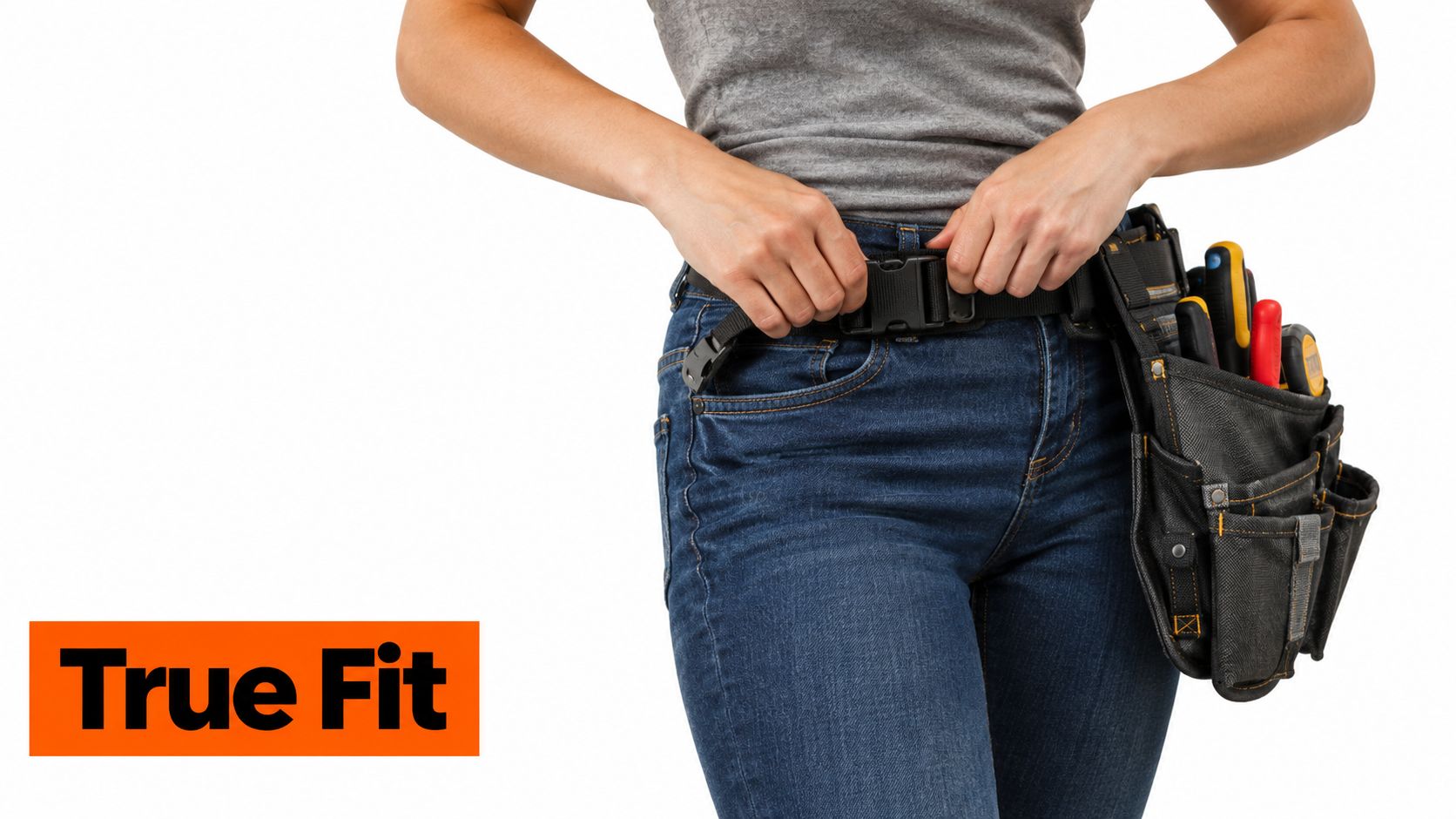
A female-shaped cut usually gives more room where it is needed and more stability where it counts. That means less constant pulling at the waistband, fewer pressure points under a belt or harness, and better movement when the day turns physical. Australian workforce data also shows why this is not a niche concern, women's participation has become structurally important across more age groups and work patterns (ABS, AIHW).
See our guide to women's work jumpers for layering on site for cold starts.
The wrong cut costs you movement
If you have to keep fixing your jeans, they are already getting in the way of the job.
The practical test is simple. If the front waistband pinches when you sit, if the back gaps when you bend, or if the thigh seam pulls tight when you climb, the cut is wrong for site work. Women's sizing is not a token add-on in that context, it is the difference between clothing that supports movement and clothing that creates friction all shift.
Key Fit Features for Active Work Environments
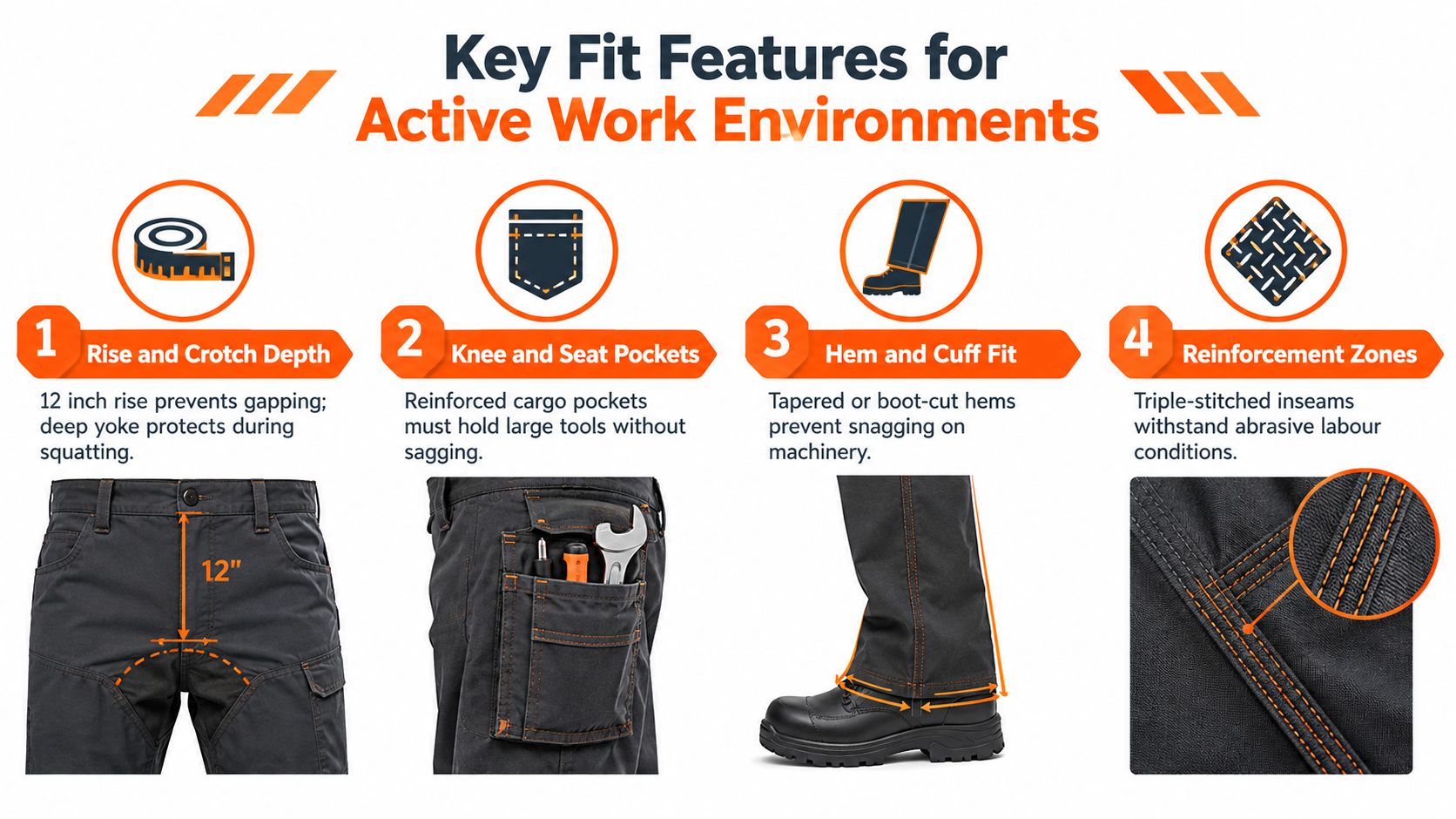
The best womens work jeans stay in place through crouching, climbing, and long hours in and out of vehicles. That is the standard on site and in the fitting room. You want a jean that anchors without constant adjustment, clears a harness, and leaves enough room for the legs to work.
Check the rise, waistband, and thigh shape
A higher back rise helps keep the jeans covered when you bend or kneel, while a contoured waistband reduces gapping without relying on a tight belt. If the waistband has to do all the work, the garment usually fails at the waist or pinches at the front. Hip and thigh ease matter just as much, because a jean that fits the waist but clamps down through the seat or upper leg will restrict movement once you start climbing or squatting.
Women-specific patterning earns its keep on jobs that involve repeated bending and load carry. A cut that follows the body's shape gives room where the strain lands, instead of forcing the fabric to stretch into a shape it was never made for.
Use pocket placement and knee shape as job tests
Pocket placement should match the work, not the product photo. If you carry a knife, marker, tape, or phone, the pockets need to stay secure and reachable without digging into the hip when you sit. Knee articulation matters too, because a straight leg that looks tidy can feel wrong the moment you crouch or kneel on a slab, in a yard, or beside plant.
Harness clearance is worth checking before you commit. Sit, squat, and reach overhead with the belt on, or with the same layered setup you use on site. If the rise bunches under the harness, if the waistband rolls, or if the thigh pulls tight when you climb, the cut is not doing the job. Belt loops should also take real use, since a tool belt puts far more strain on them than casual wear ever will.
For measuring and ordering online, the simplest check is to compare your working posture, not just your static waist size. The guide on how to measure yourself for workwear when ordering online is useful if you are buying for yourself or ordering for a crew. One practical option for cold starts is the Outrig Supply Co Hi-Vis Hoodie – Orange/Black, which is a unisex workwear layer built around a heavyweight fleece shell, but it still needs to sit cleanly over the jeans without bunching at the waist or catching on harness gear.
Stretch Versus Rigid Denim for Trades Work
Stretch denim helps when the job asks for repeated flexion. Rigid fabric helps when the job punishes cloth all day. The mistake is treating those two options as if one is always better, because the right answer depends on what you are doing on site.
When stretch earns its keep
Stretch denim is useful for climbing, kneeling, crouching, cab access, and long drives between locations. It reduces the feeling of restriction through the thigh and knee, which makes a real difference when you're moving all day. That's especially relevant for women's work jeans, because a good stretch range can support movement without forcing the wearer to size up and lose waist stability.
When rigid fabric makes more sense
Abrasion-heavy work is a different story. Australian workwear guidance separates movement-intensive tasks from tougher jobs such as welding, concreting, and demolition, where cotton drill or canvas may be the better material choice (AIMS Industrial guide). That doesn't mean stretch denim is weak, it means the cloth has limits, and those limits matter when the job involves rough surfaces, sharp edges, heat, or repeated friction.
The same guide also notes that work near traffic or moving plant may call for compliant high-visibility clothing rather than ordinary denim. So fabric choice isn't just about comfort, it's part of the task risk assessment. If the day is mostly movement, stretch can be the smarter call. If the day is mostly abrasion, heat, or hazard exposure, rigid construction is usually the safer one.
Practical rule: choose stretch for movement, choose tougher non-denim fabrics for abrasion, and don't assume a comfortable jean is automatically protective.
The check that matters is recovery. If the fabric stays bagged out at the knee, sags at the seat, or loses shape by the end of the shift, it's not holding up for trade work. A good women's work jean should flex, then come back.
Comparing Fabric Weight and Reinforcement Zones
Fabric weight gives you a quick first read on what a jean is meant to handle. Reinforcement tells you whether the maker expected the garment to survive repeated strain or just look tough on day one. If you're buying for a crew, these details matter more than finish or wash colour.
| Fabric Weight | Best Use Case | Durability Notes |
|---|---|---|
| Lightweight denim | Hot conditions, lower-friction tasks, indoor or workshop wear | Easier to move in, but less forgiving under abrasion and hard site use |
| Midweight denim | General trade wear, mixed indoor and outdoor work | A balanced option when you need movement plus decent wear life |
| Heavyweight denim | Rougher site conditions, frequent kneeling, longer shifts | Usually holds shape better and resists wear, but can feel stiffer at first |
| Reinforced stretch denim | Movement-focused trade roles | Good for flex and recovery if the pattern is right, but check stress points carefully |
Look past the cloth and inspect the build
The seams tell you as much as the fabric does. Bar-tacks at pocket corners, reinforced knees, and double-stitched seams usually matter more than a glossy product description. If the inseam, seat, and pocket edges are weak, the jeans will show it when you're climbing steps or loading gear, not when you're standing still in a fitting room.
For trade buyers, product pages should also be clear about fibre composition and reinforcement zones, not just marketing language. The earlier fabric discussion about heavyweight T-shirts and fabric weight follows the same logic, heavier materials often behave differently under wear, but only if the construction matches the use case. A pair of women's work jeans should make those trade-offs visible before you buy.
The On-Site Try-On Movement Test
Static sizing charts miss the point. A pair can measure right on paper and still fail the first time you climb stairs, squat to a bolt, or sit behind the wheel for an hour. Use a movement test before you approve a pair for yourself or for a crew order.
Run the same motions you do on site
Start with a deep squat. The waistband should stay flat, the crotch shouldn't pinch, and the back rise shouldn't pull down or expose skin. Then kneel on one leg and check whether the knee seam binds or whether the thigh fabric jams against the hip.
Next, climb a few steps two at a time if you can do it safely. Watch for tightness through the front thigh and whether the hem catches your boot or twists around your leg. Finish by sitting in a driving position, because long cab time exposes waistband roll, seat tension, and pocket discomfort faster than standing around ever will.
If a pair needs to be adjusted every few minutes during the test, it won't improve once the shift starts.
Judge the failures, not just the feel
A good fitting room test should answer four questions. Does the waist stay put, does the thigh move freely, does the knee bend cleanly, and does the seat stay covered when you lean forward? If the answer is no to any of those, keep looking.
For crew buying, make the test consistent across sizes and body types. That gives you a better read than relying on waist measurements alone, and it helps avoid the common mistake of issuing the same cut to every woman on the job. Womens work jeans should be validated in motion, because that's where the actual workload happens.
Making the Right Choice for Your Crew
A crew purchase works best when the jeans match the task, the site, and the body wearing them. For crane ops, rigging, FIFO rosters, and shutdown work, start with fit, then movement, then fabric strength, then pocket layout. If one of those fails, the jeans become another thing to manage all shift.
Build the buying decision around use, not style
If the role means repeated bending, climbing, or long time in a vehicle, stretch and a proper women's pattern usually hold up better. If the work is harder on cloth, move to heavier construction and stronger reinforcement. If the site has visibility or hazard rules, the jean has to fit inside that setup, not sit apart from it.
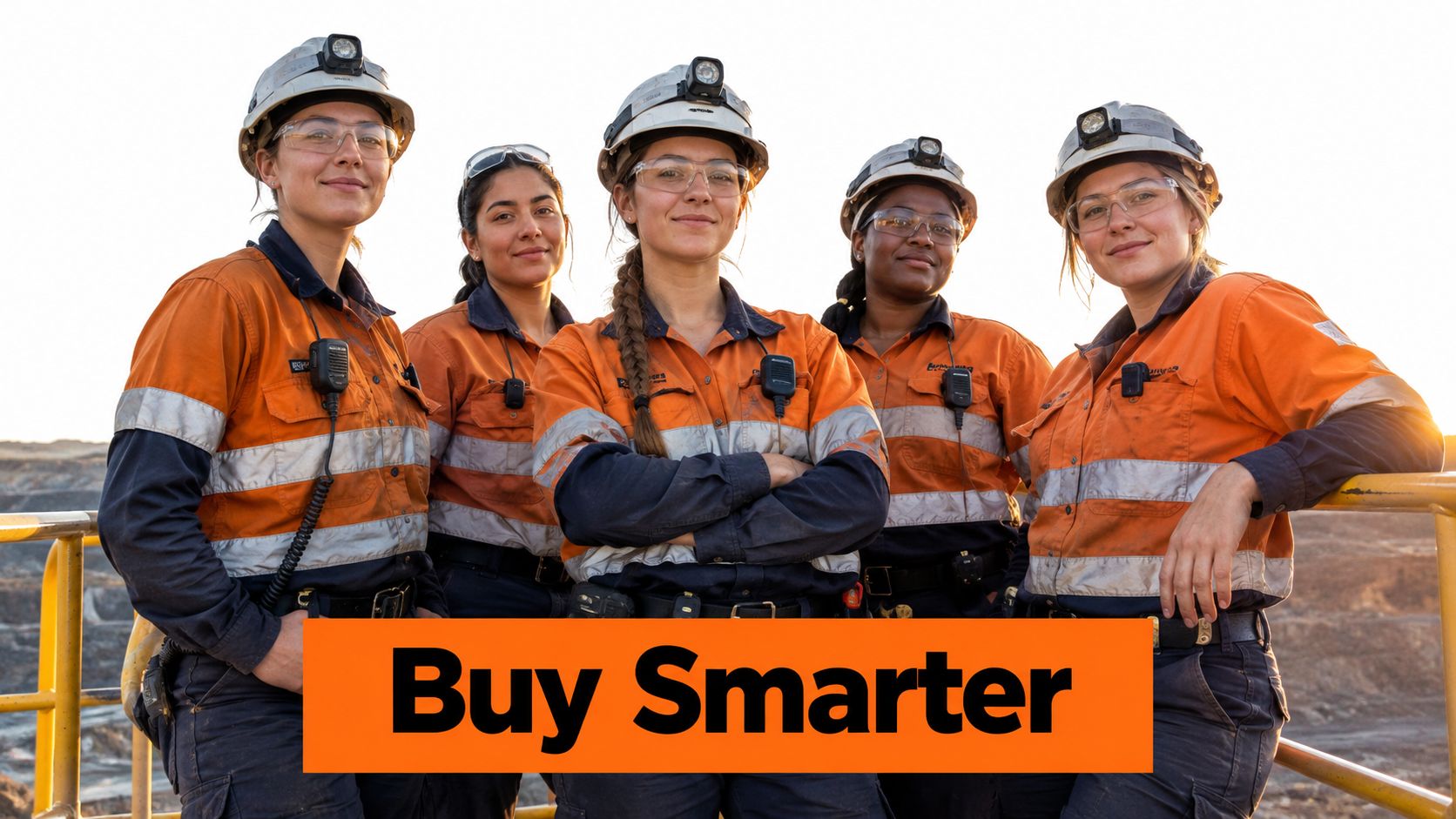
For crew buying, stock a usable size range, not a token spread. Issue a trial pair to a few body types on the roster, then have them wear it through the same tasks they do on site and report where it rubs, pulls, or rides up. For FIFO crews, build the test around roster timing as well, since a pair that feels fine in the depot may fail after a full day in the cabin and on the ground. Keep the order tied to actual roles, because riggers, operators, and fitters often need different balance points between stretch, durability, and pocket access.
Women's workwear belongs in the core order, and the final call should be based on how the jeans perform in the work, not on a catalogue description. The right pair is the one the crew can wear, test, and keep using without constant adjustment.