

You're on a wet Australian site before sunrise. The wind is pushing through the laydown area, your base layers are already doing their job, and you pull on a shell before heading towards the crane. Ten minutes later, the task changes. You're climbing, reaching overhead, clipping into a harness or handling gear, and the jacket that felt protective at the gate is now tight across the shoulders, riding up at the hem and holding heat against your back.
That's the core problem behind shell jacket women's searches. A worksite shell isn't just a men's jacket made smaller, and it isn't a casual raincoat with a shaped waist. It has to manage rain, wind, sun, sweat, PPE, visibility and movement at the same time. The right choice starts with the work you do in it, not the size printed on the label.
Table of Contents
- Why Shell Jackets for Women on Site Are Harder Than They Look
- What Waterproof and Breathable Actually Means on a Work Site
- Fit Is a Safety Question, Not Just a Sizing Choice
- Matching Shell Type to Australian Weather and Work Rates
- Building a Layering System Around the Shell
- How Supervisors and Procurement Teams Should Specify Shells
- Women in Australian Trades and Why Proper Outerwear Matters
Why Shell Jackets for Women on Site Are Harder Than They Look
A generic shell often fails in predictable ways. The sleeves look long enough while standing still, then expose the wrists when both arms rise. The waist shaping looks neat in a catalogue, then pulls across the back when you lean into a task. An oversized unisex jacket avoids those problems but can leave too much fabric around harness straps, machinery or tools.
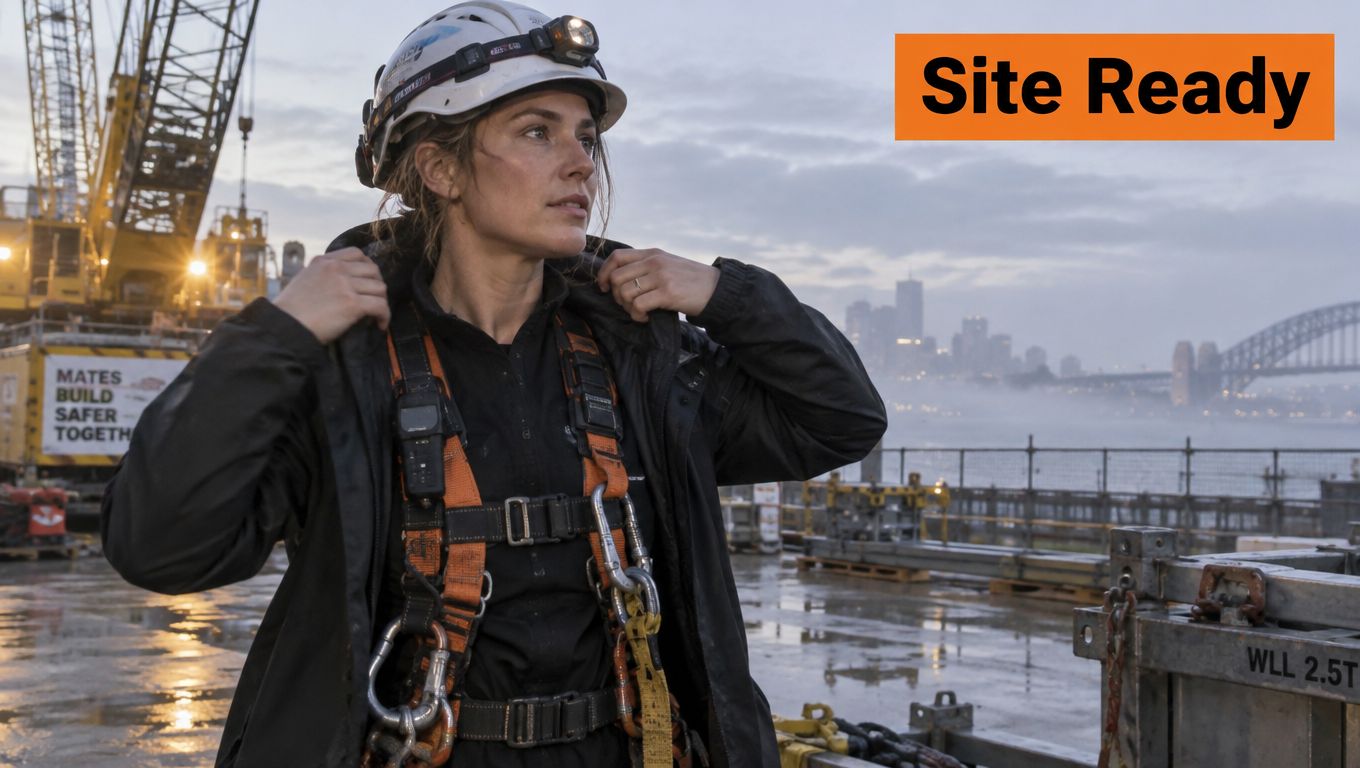
The site changes faster than the forecast
A rigging or shutdown crew rarely works in one fixed posture. You may start with paperwork or a walk-through, move into an exposed work area, climb access points, operate equipment, then spend time waiting in wind before the next lift. A shell that performs well during a stationary rain break can become uncomfortable during high-output work because the same sealed construction slows sweat evaporation.
Safe Work Australia explains that clothing and PPE can impair sweat evaporation, while heavy or impermeable garments can trap heat near the body and increase heat-related illness risk. That makes breathability, ventilation and easy removal worksite requirements, not comfort extras. Safe Work Australia's heat guidance also supports considering work rate, acclimatisation, shift duration and local conditions before selecting protective clothing.
Practical rule: If you can't open it, remove it or move freely in it, the jacket may protect you from rain while creating another problem.
The women's label isn't the test
A women's cut can improve proportion, but the label alone says nothing about safe movement. A short, heavily shaped jacket may restrict reaching. A broad unisex shell may catch on equipment. The useful question is whether the garment stays in place while you perform the movements your role demands.
That's why a shell jacket for women should be judged against the actual combination of harness, hard hat, gloves, hi-vis, base layers and tools. It must also be separated from certified PPE requirements. A general rain shell doesn't replace hi-vis, arc-rated, chemical-resistant or other task-specific protective clothing when the site requires those standards.
What Waterproof and Breathable Actually Means on a Work Site
Waterproof and breathable ratings describe different jobs. Hydrostatic head, usually shown in millimetres, indicates how much water pressure fabric can resist in a laboratory test. A higher figure can help during sustained rain, but it doesn't tell you how hot the jacket will feel during a climb or whether the hood, cuffs and zip will keep water out.
Breathability figures describe how moisture vapour moves away from the body. Depending on the manufacturer, you may see an MVTR figure or a RET rating. These tests can help compare fabrics, but they don't recreate a full shift under a harness in humid weather.
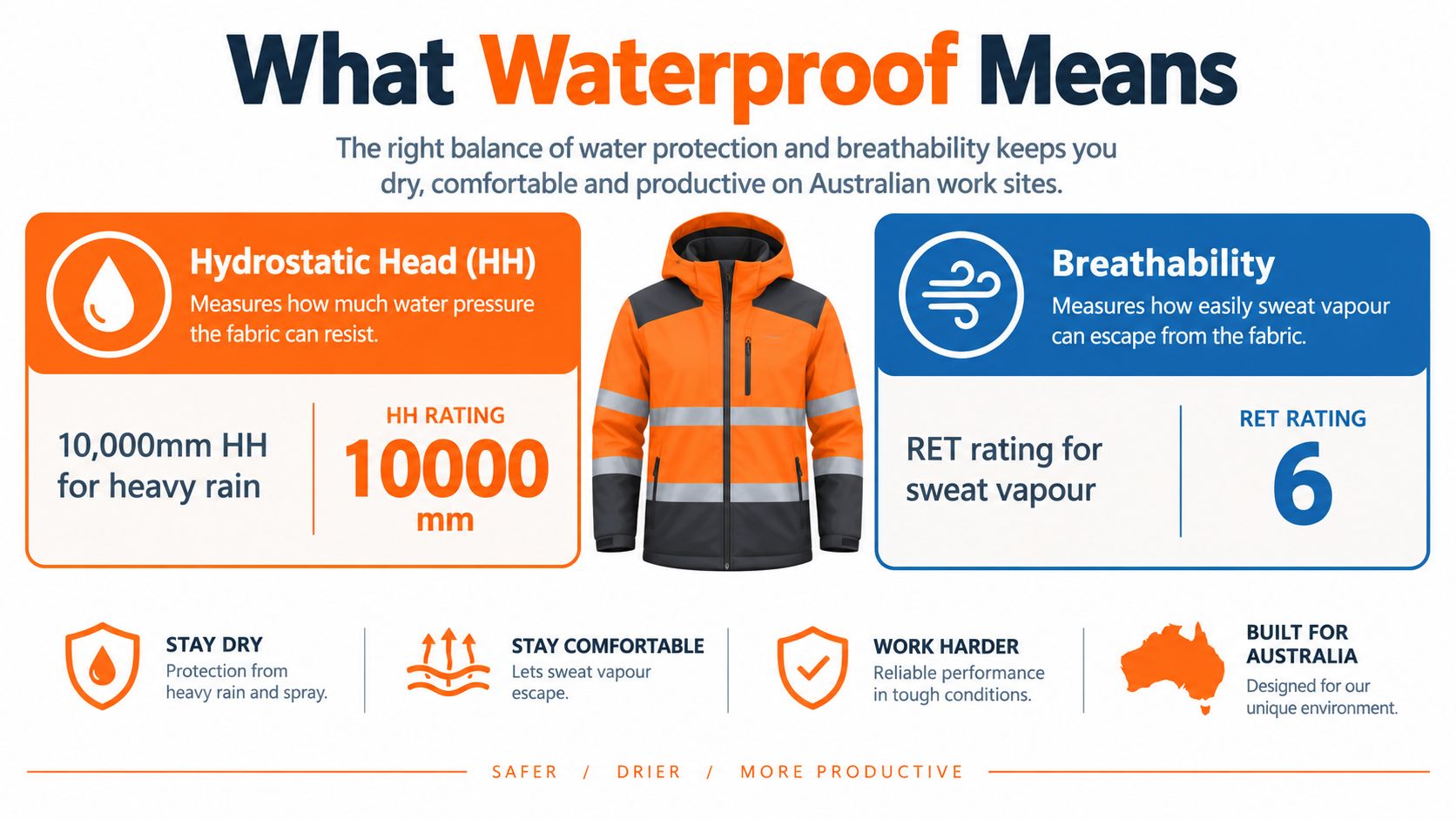
Read the specification as a system
Use the numbers as a starting point, then check the construction around them.
- Waterproof rating: A shell for brief showers and wind has different demands from one used through sustained northern rain. Look for the stated hydrostatic head, sealed seams and a reliable storm flap or water-resistant zip.
- Breathability rating: A breathable fabric can still feel clammy if the design has no way to release heat. Check whether the jacket has pit zips, two-way zip access or other ventilation.
- Construction: Sealed seams, adjustable cuffs, a protective collar and a hood that works with your hard hat matter as much as the membrane.
- Site compatibility: A highly waterproof shell may be unsuitable if it obscures mandatory hi-vis or forces you to remove it during physical work.
For a cold, wet Perth morning, wind resistance and comfortable layering may matter more than an extreme waterproof specification. In tropical humidity, ventilation becomes central because the environment already limits evaporation. During a short summer shower, a lightweight shell that packs away may be more useful than a heavy, fully sealed jacket.
A cotton base layer, such as the Outrig Supply Co Women's Crew Tee, can sit under a shell for general crew wear, but it isn't a substitute for a moisture-management or certified site garment where those are required. Its product information describes a relaxed fit, premium cotton blend and sizes from XS to 3XL. Treat it as an apparel layer, not PPE.
The video below can help visualise how waterproof construction and breathability interact, but always compare the finished garment's features with your site conditions.
Fit Is a Safety Question, Not Just a Sizing Choice
A size chart measures the garment. It doesn't show what happens when you climb a ladder, reach for a tag line or lean into a control position. Worksite fit is a moving relationship between the jacket, your body and every item worn underneath or over it.
Australian WHS expectations require PPE to be suitable for the hazard, correctly sized, reasonably comfortable and used correctly. Poor fit can affect dexterity, visibility, snag risk and weather coverage. This workwear measurement guide is useful for starting with accurate measurements, but a movement test should follow.
Test the jacket in the positions that matter
Try the shell over your normal base and mid-layer. Put on the harness, hard hat and gloves you use day-to-day, then work through the movements below. A changing-room mirror is helpful, but it won't replace reaching, bending and rotating.
| Task or gear | Fit check | Safety risk if failed |
|---|---|---|
| Arms raised | Sleeves still cover the wrists and shoulders don't pull | Exposed skin, restricted reach or reduced glove overlap |
| Harness worn | Hem stays clear of the harness and doesn't bunch beneath straps | Pressure points, poor strap contact or snagging |
| Hard hat and hood | Hood turns with your head and doesn't block peripheral vision | Reduced awareness and awkward head movement |
| Gloves and pockets | Pocket openings remain reachable with gloves on | Dropped tools or unsafe hand positions |
| Mid-layer underneath | You can add insulation without tightness across the chest or back | Restricted movement and trapped heat |
| Climbing or crouching | Hem and back coverage stay in place | Exposure to rain, wind or abrasion |
Look for controlled room, not excess cloth
The best fit leaves enough room for the layers and movement you need, without loose hems, dangling cords or oversized sleeves. Excess fabric can catch on plant or lifting equipment, while aggressive waist shaping can limit rotation. Adjustable cuffs and hems are more useful than a narrow cut that only looks tidy when standing still.
If you use a crew hoodie as a cold-weather mid-layer, check its bulk before buying the shell. The Outrig Offshore Crew Hoodie is described as a heavyweight 350 GSM fleece with a relaxed unisex box-style fit, drop shoulders and sizes S to 3XL. That type of layer may be comfortable for cold starts, but the shell needs enough shoulder and arm room to accommodate it without compressing movement.
Matching Shell Type to Australian Weather and Work Rates
The most protective shell on paper isn't automatically the most useful jacket for a shift. Selection should reflect weather exposure plus work rate. A person standing in wind, a worker climbing repeatedly and a crew moving through humid rain may need different outer layers even on the same site.
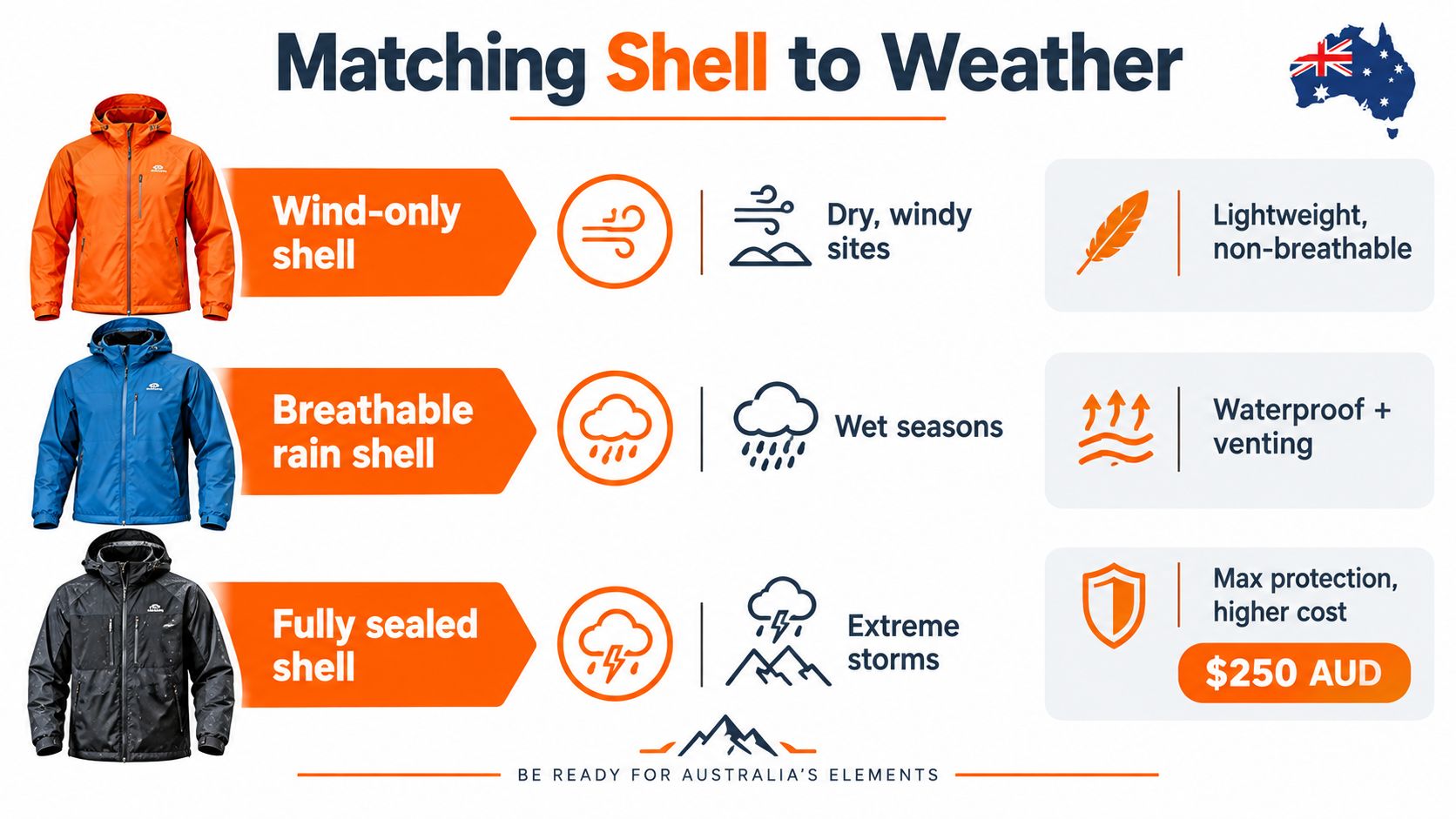
Wind-only shells
A lightweight wind shell suits dry, exposed conditions where the main problem is chill rather than rain. It can work well for a cool morning, vehicle movement or low-output tasks, provided it doesn't replace required protective clothing.
The limitation is obvious. Once rain becomes sustained, a wind layer can wet through and leave the mid-layer cold. It's a poor choice for a site where showers are likely to continue and there's no practical place to dry clothing.
Breathable rain shells
A breathable rain shell offers a more balanced option for variable conditions. Look for sealed seams, adjustable cuffs, a usable hood and ventilation that can be opened before you become overheated. This category suits wet-season work, shifting cloud and jobs where rain protection must stay on while the crew remains active.
Pit zips are especially useful because they release heat without requiring the front of the jacket to open fully. Two-way zips can also help when sitting, climbing or accessing equipment, but check that the lower opening doesn't interfere with harnesses or snag points.
Fully sealed shells
A fully sealed shell makes sense for severe weather exposure, prolonged rain or work where staying dry is critical. The trade-off is higher heat load and lower forgiveness during hard physical work. If the wearer overheats and removes the jacket, its waterproof rating no longer helps.
Use this decision frame:
- Dry and windy: Choose a light wind shell with room for the required base layer.
- Brief showers: Choose a packable rain shell with effective hood and cuff adjustments.
- Sustained rain: Prioritise seam sealing, storm protection and ventilation.
- Tropical humidity: Give ventilation and low bulk equal weight to waterproofing.
- Desert temperature swings: Choose a shell that layers over insulation but can be stripped quickly.
- Cool, wet coastal conditions: Balance wind protection, rain resistance and comfortable movement.
The jacket must also fit over mandated hi-vis and winter layers without hiding visibility panels or restricting the arms. A shell that works in isolation may fail once the full work system is worn.
Building a Layering System Around the Shell
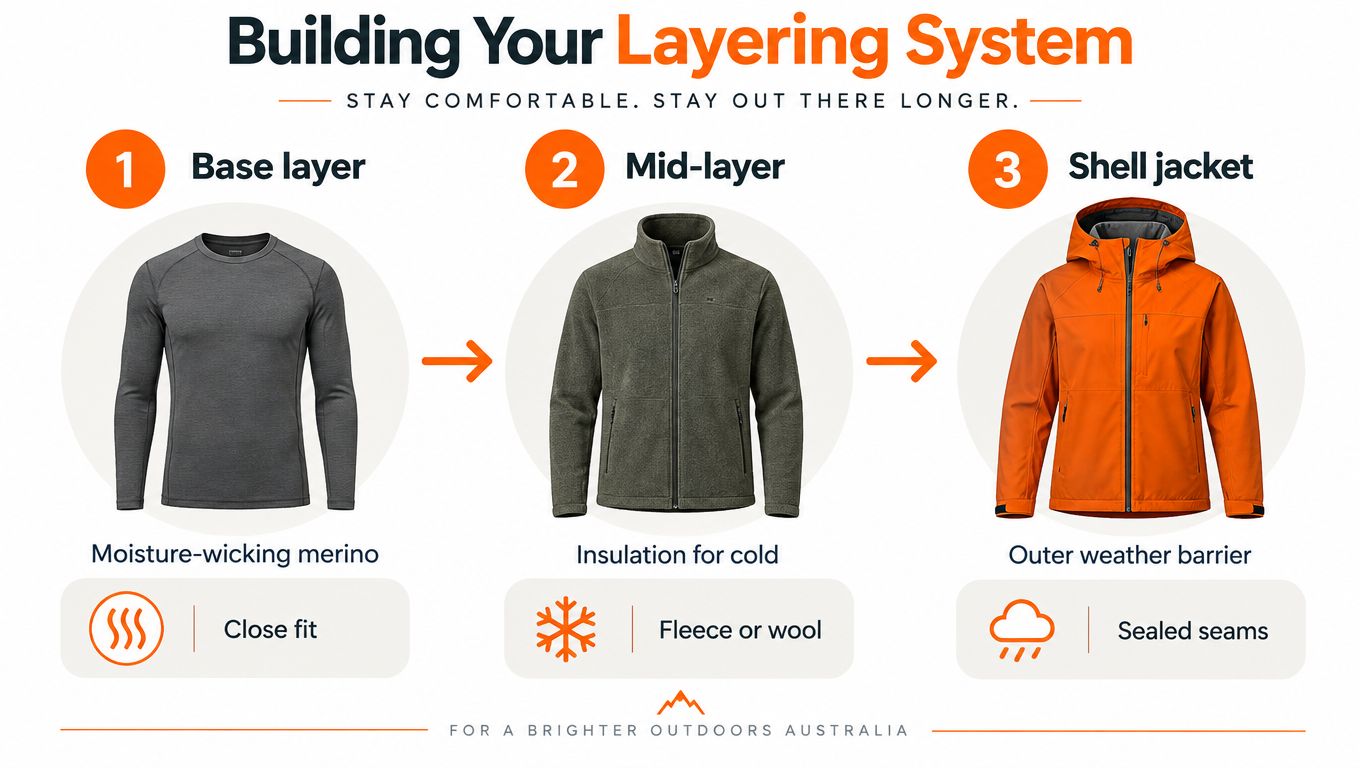
A shell works best as the outer barrier in a deliberately simple system. The base layer manages contact with the skin, the mid-layer provides insulation, and the shell controls wind and rain. None of those layers can compensate for the wrong fit or an unsuitable work-rate decision.
Start with the layer closest to the body
Choose a base layer that moves moisture away from the skin and doesn't bunch beneath the shell. A close fit helps prevent folds from creating pressure points under a harness or shoulder strap. Cotton may feel comfortable at the start of a shift, but it can stay damp after high-output work, so match the fabric to the task and conditions.
Add insulation only when the environment or rest periods demand it. A fleece or wool mid-layer gives warmth without requiring the shell itself to be insulated. That makes it easier to adapt as the shift changes.
Keep the outer layer adjustable
Before leaving the crib room or vehicle, check that the shell fits over the full planned combination. Then test:
- Underarm ventilation: Open it before heavy work, not after sweat has soaked the layers.
- Two-way front zip: Confirm the lower opening doesn't conflict with harness straps or tools.
- Cuffs: Tighten them over gloves without cutting circulation or exposing the wrist.
- Hem: Adjust it so it covers the back while bending, without loose fabric around equipment.
- Hood: Stow or secure it when it isn't needed, and check that it works with the hard hat.
The Outrig cotton drill shirt guide can help when planning workwear layers, but a shell still needs to accommodate the actual shirt, hi-vis requirements and insulation worn on your site.
Remove heat before it becomes a problem
Safe Work Australia advises considering clothing and PPE effects on sweat evaporation and using removal or ventilation where appropriate. During rest periods, open or remove unnecessary layers if the conditions allow. That simple habit is more effective than choosing a permanently heavy shell and hoping the fabric will manage every temperature.
How Supervisors and Procurement Teams Should Specify Shells
A crew order should begin with the job hazard and work pattern, not a single jacket model for everyone. Identical shells can create poor outcomes when workers have different body proportions, roles, layering needs or PPE requirements.
Write the specification so a supplier has to answer practical questions:
- Weather protection: What level of rain and wind exposure will the jacket handle, and are the seams sealed?
- Heat control: What ventilation is built in, and can workers open it while wearing gloves or harnesses?
- UV protection: Is the fabric certified UPF 50+ where sun exposure is a significant part of the task?
- PPE interaction: Does the shell fit over mandated hi-vis, winter layers and harnesses without hiding required visibility?
- Movement: Have workers tested arm lift, climbing, crouching, rotation and tool access?
- Role variation: Do some workers need certified arc-rated, chemical-resistant or other specialist garments instead of a general shell?
- Sizing process: Can workers use measurements and try the jacket over their normal layers before the order is finalised?
Australian outdoor workers need UV protection as well as heat control. SafeWork NSW guidance on extreme heat recommends lightweight, closely woven work clothing with a UPF 50+ rating, coverage of the arms and torso, and designs that support cooling.
Procurement check: Ask workers to perform the real task in the sample jacket before approving the bulk order. A spreadsheet can compare fabric ratings, but it can't show a sleeve exposing the wrist during a lift.
Also check how the shell sits over hi-vis. A rain layer that obscures required markings or creates confusion about compliance isn't solved by ordering a brighter colour. Outrig Supply Co's hi-vis shirt range is one reference point for thinking about visibility as part of the broader workwear system, rather than treating the shell as a standalone garment.
Women in Australian Trades and Why Proper Outerwear Matters
Australia's construction workforce shows why women's workwear deserves specific attention. In May 2024, approximately 1.37 million people worked in the Australian building and construction industry, including 186,696 women, who represented 13.6% of the total workforce. Women made up only 3.1% of trades workers, however, which shows that participation remains much lower in hands-on site occupations than across the industry overall. The Master Builders Australia workforce report provides that breakdown.
The same report recorded women as 4.7% of building and construction apprentices in training, while women represented 6.4% of apprenticeship cancellations or withdrawals. Completions rose from 5.2% in 2022 to 5.9% in 2023, according to the report. These figures point to a workforce that remains underrepresented in trade roles but is not static.
Clothing affects access to the job
A shell jacket won't solve discrimination, poor supervision or inadequate site facilities. It can, however, remove one avoidable barrier. If a worker has to choose between restricted movement, trapped heat, exposed wrists or a jacket that catches on equipment, the employer has supplied a preventable problem.
An ABC report on women in Australian construction stated that women represented about 13% of the building and construction workforce, while only 2% worked directly in trades. It also reported that 73% of women in the industry had experienced “gender adversity” at work, based on a National Association of Women in Construction survey. The Australian construction coverage also describes NSW and Victorian efforts to improve representation and notes continuing reports of discrimination and harassment.
Those figures matter to outerwear because inclusion is practical. A worker who can move, regulate heat and combine a shell with required PPE is better placed to perform the job without making constant compromises. Supervisors who offer women only adapted men's sizing are not taking a neutral approach. They're making the worker solve a design problem during the shift.
Treat fit as part of retention
Proper outerwear should be tested by task, supplied in a useful size range and reviewed alongside other PPE. It should support workers through cold starts, wet weather, high-output periods and long waits, rather than assume one cut suits the whole crew.
A shell jacket for women is therefore more than a retail category. It's a small but visible test of whether a site has considered who is doing the work, how that work is performed and what the conditions demand.
Outrig Supply Co offers Australian crane, rigging, FIFO and shutdown crews trade-focused apparel, headwear, accessories and crew bulk-order options, including women's crew clothing for everyday site wear. Visit Outrig Supply Co to review the range and build a workwear setup around the shell, layers and site requirements you use.