

For hot Australian worksites, a 190–210 gsm cotton drill shirt gives the best balance of breathability and durability. 250–310 gsm is for cooler conditions or heavy abrasion, because it holds more heat and dries slower.
You know the moment. You're halfway through a shutdown swing in the Pilbara, the sun's punishing, the crib tent feels like an oven, and the question isn't whether your shirt looks the part, it's whether it'll let you finish the shift without cooking you.
Table of Contents
- Why Cotton Drill Remains the Standard on Aussie Sites
- Understanding Cotton Drill Fabric Construction
- Matching Fabric Weight to Site Conditions
- Key Durability Features to Look For
- Fit, Sizing, and Compliance Considerations
- Procurement Strategy for Crews and Teams
Why Cotton Drill Remains the Standard on Aussie Sites
On a Pilbara shutdown, a shirt earns its place by surviving the shift, not by looking rugged on the rack. Heat changes the decision. A tight cotton drill shirt can handle contact with steel, dust, ladders, and equipment, but that same construction can hold more heat than a lighter work shirt. The practical choice is balancing abrasion resistance against how much fabric you can tolerate once the temperature climbs.
That trade-off explains why cotton drill remains common across Australian sites. It gives crews a dependable base for hard-wearing work, while still allowing enough airflow for many outdoor jobs. It is not automatically the coolest option, and treating it that way leads to uncomfortable shifts. Its strength is the balance between protection from daily wear and workable comfort.
The fabric also has a long local history. Khaki drill was already used by colonial forces around 1890, and a government-stamped jacket dates to 1901, before Federation. By the late 1930s, the Australian Army's demand for cotton led mills in Melbourne and Sydney to submit Blue Jean and Khaki Drill samples made from Australian-grown cotton. The Commonwealth later specified American cotton for some military clothing because domestic supply remained too small. These details are covered in tagg.com.au's history of Australian workwear.
From military khaki to trade standard
Military use did not make drill suitable for every job, but it established a practical pattern. The fabric moved into trade clothing because it could withstand abrasion, repeated wear, and rough handling better than flimsy shirting. Reinforced construction, sound stitching, and a cut that allows movement determine how well an individual shirt performs, but the drill base gives manufacturers a useful starting point.
Practical rule: for hot, dirty outdoor work, assess cotton drill first, then decide whether the site demands lighter fabric or greater abrasion resistance.
A crane crew, fitter, and builder may all choose drill for different reasons. One shirt might face rigging contact, another repeated ladder work, and another constant movement through dust and machinery. The common requirement is fabric that remains serviceable after contact with the job, without making the wearer overheat before the shift is done.
What still wins in real conditions
Drill remains a sensible default because it handles ordinary site punishment without relying on novelty. It is also familiar to procurement teams, easy to specify, and suited to workwear designs that include practical pockets, collars, and reinforcement. The right choice still depends on exposure: heavier construction can improve resistance to scuffing, while lighter construction can make a long, hot shift more tolerable.
Outrig Supply Co's crane-crew shirt article reflects that same site-first approach. Cotton drill remains standard because crews need clothing that works with the conditions, not against them.
Understanding Cotton Drill Fabric Construction
On a wet morning, a drill shirt can move from a vehicle cab to steelwork and machinery without feeling like ordinary shirting. Its performance comes from the construction. A twill weave places the yarns in a diagonal pattern, creating the ribbing you can see and feel. The closer, more stable structure helps the fabric resist scuffing against equipment better than a looser cotton shirt. The trade-off appears in hot conditions: denser cloth handles more abrasion but gives up airflow and takes longer to dry. The WorkIt Workwear materials guide describes drill as a tightly woven, traditionally cut fabric used for shirts, pants, and overalls. Reinforced shoulders, double stitching, bartacks, and preshrunk construction can further support service life under industrial laundering.
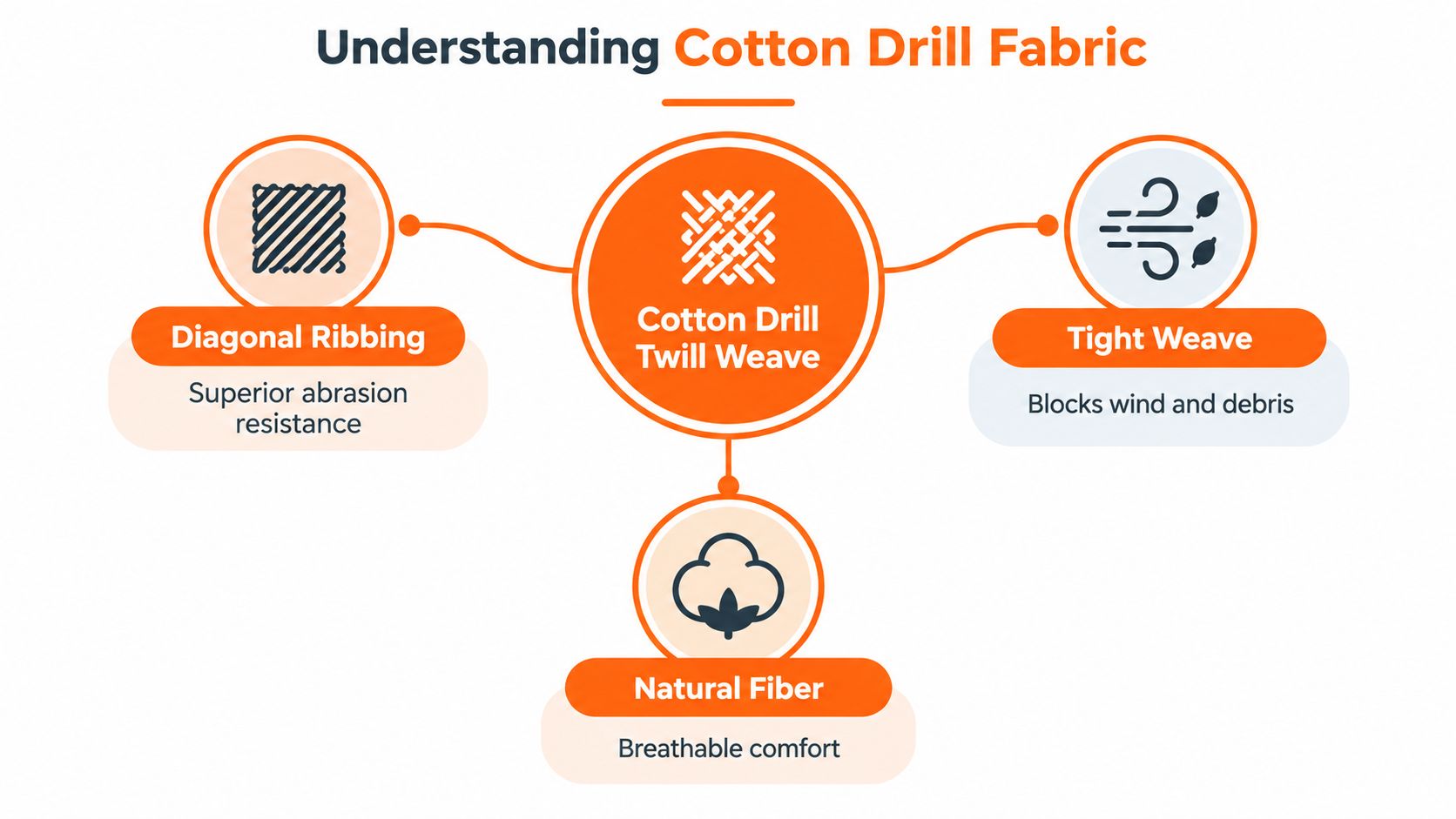
Why the weave changes the feel
Plain cotton usually feels softer and lighter because its simpler weave leaves more room between yarns. Drill has a firmer hand because the yarns sit closer together. On site, that structure matters when you brush against steel, climb in and out of plant, or sit against rough surfaces. It gives the shirt more resistance to scuffing, while making it feel more like workwear than casual clothing.
Fabric weight changes the result. General work shirts commonly sit around 190–210 gsm, while heavyweight drill is commonly about 250–310 gsm. As the fabric becomes heavier, its twill structure feels denser, the shirt hangs with more body, and air moves through it less freely. It also holds more moisture after sweat or washing, as outlined in the AIMS Industrial workwear guide.
A heavier shirt offers greater stability and abrasion resistance, but it retains more heat.
What the numbers mean in practice
A 210 gsm shirt gives useful structure without the full burden of heavyweight cloth. In humid conditions, it will generally feel less punishing than a 310 gsm garment and will dry sooner. The heavier option makes more sense where repeated rubbing, rough handling, or contact with equipment matters more than ventilation.
Choose the fabric for the hottest realistic part of the shift. A wet start followed by direct sun can make heavyweight drill uncomfortable long before it shows wear.
The Outrig Supply Co Heritage Badge Heavy T-Shirt provides a product example with 280 GSM carded cotton, a boxy oversized fit, and preshrunk construction. It shows how heavier cotton develops a denser, more structured feel. The same heat-versus-abrasion decision applies when selecting a drill shirt for site work.
Matching Fabric Weight to Site Conditions
On a Karratha shutdown in January, a 250 gsm drill shirt can become uncomfortable quickly once the sun is up and the work rate increases. In cooler weather or rougher work areas, that same extra fabric can protect the shirt from abrasion and repeated rubbing. Fabric weight is a work decision, not a durability score on its own.
| Weight Class | Typical GSM | Best For | Heat Retention |
|---|---|---|---|
| Regular drill | 190–210 gsm | General trade work, hot sites, mixed indoor-outdoor shifts | Lower to moderate |
| Heavy drill | 250 gsm | Rougher wear, drier conditions, crews that need more fabric stability | Moderate to high |
| Heavyweight drill | 310 gsm | Cooler conditions, high abrasion, jobs where durability matters more than comfort | High |
The practical match-up
A 190–210 gsm cotton drill shirt suits general Australian trade work because it provides useful structure without becoming oppressive in heat. It is the practical starting point for humid shifts, direct sun, and crews moving between open areas, vehicles and indoor plant. For a clearer explanation of how fabric weight affects wear and comfort, compare the heavyweight T-shirt fabric-weight and fit guide.
That lighter range will not handle every abrasive task as well as heavier cloth. It works best when the shirt needs to stay wearable through the hottest part of the shift, rather than carrying maximum protection against rough surfaces.
A 250 gsm shirt earns its place where abrasion matters more than ventilation. Yard work, rough handling, straps, equipment and repeated contact can justify the added body. It is a sensible choice for drier conditions or tasks that put regular friction through the shirt, provided the wearer can manage the extra warmth.
My rule on site: buy for the hottest realistic part of the day, not the coolest part of the morning.
A 310 gsm shirt suits cooler conditions and work that is consistently hard on clothing. The dense cloth can tolerate more punishment, but it also holds more heat during long periods of movement. Choose it for the task and climate, not because the largest GSM figure sounds tougher.
Where the market is moving
Australian listings now include lighter and vented drill options, along with mechanical stretch in some ranges. That reflects a practical demand for shirts that stay wearable through heat, dust and constant movement, as shown by this Plus Embroidery drill shirt listing.
FIFO crews, shutdown teams and outdoor trades need that balance. A shirt that survives the week but leaves the wearer overheated by lunch has solved only half the problem.
Key Durability Features to Look For
Fabric weight sets the baseline, but construction determines how a cotton drill shirt handles daily punishment. On Australian sites, reinforced shoulders, double stitching, bartacks and pre-shrunk fabric all address predictable failure points. These details help the shirt hold its shape, resist seam failure and remain wearable after repeated washing.
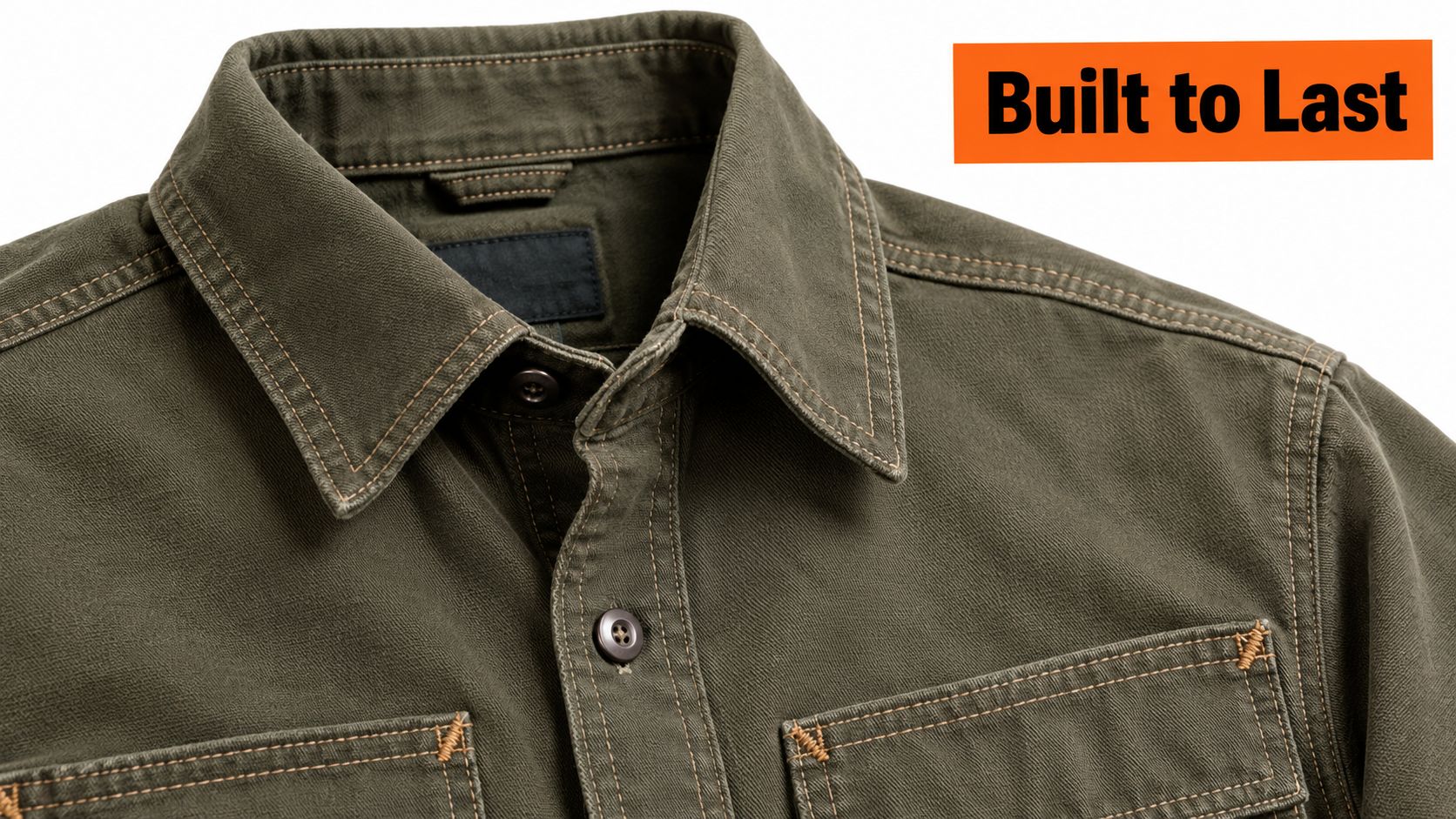
Stress points matter more than advertising copy
Shoulder construction deserves close attention. Harnesses, tool straps and overhead work place repeated pressure on that area, while abrasive contact can wear the cloth from the outside. Reinforced shoulders spread the load and reduce early breakdown around the upper seam.
Double stitching strengthens seams that flex as you twist, climb and haul equipment. It also gives the shirt more tolerance for hard laundering. A neatly finished seam will usually stay closed longer than a single line of stitching, particularly where the garment is pulled across the back or under the arms.
Heat still affects the decision. Extra reinforcement can add bulk, and a densely built shirt may feel hotter during a long summer shift. Choose the strongest construction that suits the work, then check whether the fabric and ventilation will keep the wearer functional through the afternoon.
Small details that save shirts
Bartacks at pocket corners are easy to overlook but useful in daily work. They reinforce the points that carry pens, gloves and small site items, reducing the chance of the pocket mouth tearing under repeated loading.
Pre-shrunk fabric helps preserve the original fit through washing. Excessive shrinkage can shorten sleeves, tighten the chest and make the shirt bind during overhead movement. That creates discomfort and can interfere with safe movement when the wearer is also managing PPE.
A practical inspection takes only a minute. Run your fingers along the seams, examine the pocket corners and pull lightly at the shoulders. Check that buttons are secure and that the stitching remains even around high-stress areas.
On site, lasting through the shift matters more than initial hand-feel. Look for construction that protects against abrasion while keeping enough flexibility and ventilation for the hottest realistic part of the day.
Fit, Sizing, and Compliance Considerations
A durable shirt that restricts your shoulders is still a bad shirt. On crane sites, in rigging, and during shutdown work, fit has to support movement first, because you're reaching overhead, climbing, bending and wearing PPE at the same time.
Mobility beats vanity sizing
The cut should let you move without the fabric pulling across the back or chest. If you're constantly raising your arms, a boxy trade fit is usually safer and more practical than a narrow fashion cut, because it leaves room for harnesses, layers and the weird body positions site work creates.
Women's sizing is part of that reality now, and it matters. Australian drill ranges increasingly include women's shirts, which is a better response than forcing a unisex fit onto every body shape.
Compliance can change the order
Rail-compliant variants and hi-vis options also affect what gets bought. Once reflective tape, open-front or closed-front styles, or site-specific requirements enter the picture, the shirt stops being a simple fabric choice and becomes part of compliance planning.
The safest buying habit is to measure the body and compare that to the garment chart, not to guess based on old streetwear sizes. This workwear measuring guide is useful for that exact step, especially when you're ordering online and can't try the shirt on first.
Fit is a safety issue when the shirt has to sit under PPE and still let you work.
For crane operators and riggers, the test is simple, raise your arms, squat, twist and simulate the movements you do. If the shirt binds in those positions, it's the wrong cut, regardless of how tough the fabric sounds in the listing.
Procurement Strategy for Crews and Teams
Buying one drill shirt is easy. Outfitting a shutdown crew is where the problems start, because now you're balancing sizing, role requirements, climate and stock consistency. Australian retailers are already fragmenting the category into hi-vis, rail-specific, women's sizing and open-front or closed-front variants, so the old idea of one generic shirt for everyone doesn't hold up anymore IQS Solutions cotton drill shirts.
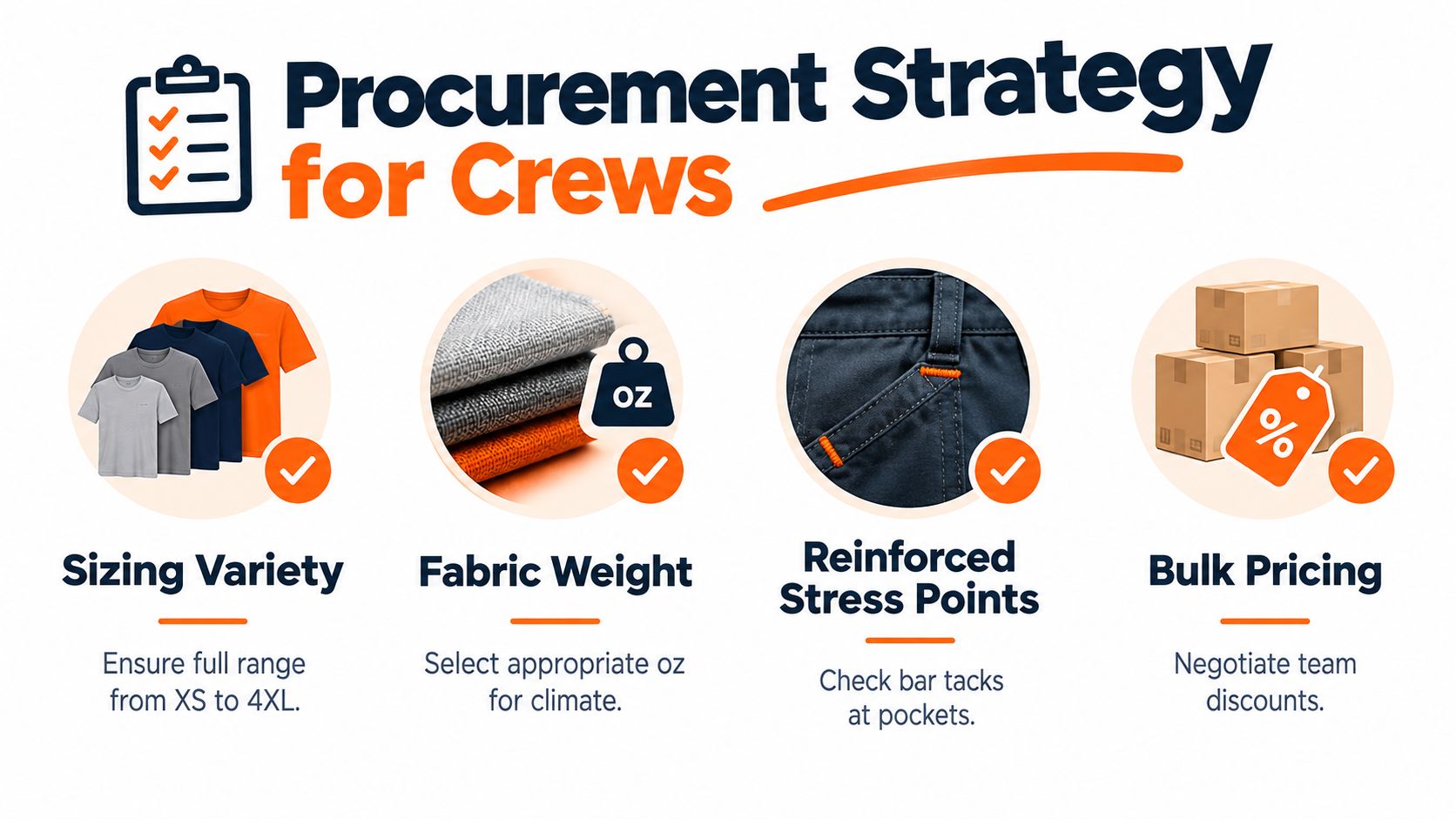
Buy around the site, not around the catalogue
A good crew order starts with the conditions. Hot WA shutdowns call for lighter drill. Yard teams with rough contact points may need more cloth weight. Rail work brings compliance requirements, and mixed crews need sizing that doesn't leave half the team compromised just to make the order simpler.
That's why procurement should treat drill as a platform, not a single shirt type. The useful question is whether the spec reduces friction on site, because the wrong shirt creates returns, substitutions and delays.
A supplier like Outrig Supply Co fits into that conversation as one domestic option for crane, rigging and FIFO crews that need trade-aligned gear, crew bulk orders and Australia-based fulfilment. Use a supplier like that when the order needs to reflect real crew roles, not just a uniform colour.
What to check before you place the order
- Sizing range: Make sure the range covers everyone who will wear the shirt, including women's fits where needed.
- Fabric weight: Match the GSM to climate and task, not to habit.
- Stress points: Check for reinforced shoulders, bartacks and sturdy seams.
- Order format: Bulk ordering matters when you're standardising crews, because inconsistent supply creates site friction.
The last piece is timing. If the shirts are being printed or made to order, build that lead time into the shutdown schedule so you're not waiting on garments when the crew is already mobilising.
The right cotton drill shirt is the one that keeps people cool enough to work, tough enough to last, and consistent enough to standardise across a crew. If you're sorting shirts for a shutdown, a mine crew or a crane team, take a hard look at the drill weight, the fit and the construction before you buy, then visit Outrig Supply Co to compare crew-ready workwear options that line up with the way Australian site crews work.