

Most advice on workwear t shirts gets one thing wrong, it treats thickness as a stand-in for performance. On an Australian site, that shortcut falls apart fast. A tee can feel tough in the hand and still be the wrong shirt for a hot shift, a harness, or a crew that spends half the day moving in and out of sun, shade and PPE layers.
The better question is simpler, what does the shirt need to survive, and what does the worker need to feel and do in it? Construction, manufacturing, mining and transport still give workwear T-shirts a huge practical base in Australia, with 2,543,527 workers across those sectors in the 2021 Census, about 20.9% of all employees listed in that table, including 1,067,645 in construction, 714,759 in manufacturing, 214,759 in mining and 546,364 in transport, postal and warehousing (ABS 2021 Census insights). That scale matters because crews don't buy a tee for a display rack, they buy it for repeated wear, washing, layering and long shifts.
Table of Contents
- Why Heavier Is Not Always Stronger
- Understanding Fabric Weight and Construction
- Heat, Sun Protection and Real Shift Comfort
- How Women in Trades Should Evaluate Fit and Function
- Choosing the Right T-Shirt by Task and Environment
- Making Crew Orders That Perform on Site
Why Heavier Is Not Always Stronger
A heavier tee often looks safer because it hangs neatly, hides body lines and gives a more structured, work-ready finish. That helps when the shirt sits under hi-vis gear, gets printed for crew identity, or needs a bit more abrasion resistance around rough surfaces. Heavier cotton also holds more heat, and on a hot Australian site that can become the actual issue.
Weight helps, until the shift starts
A FIFO worker choosing between a 280 GSM tee and a lighter breathable option is choosing more than appearance. The shirt will affect how much heat builds during rigging, crane work or shutdown maintenance, and how much sweat stays in the fabric once the job gets moving. See the heat management section above for full guidance on how clothing affects sweat evaporation and heat stress.
Practical rule: if the shirt will sit under other PPE in high heat, comfort under load matters more than how the fabric feels on a hanger.
The mistake I see most often is buyers choosing by look instead of shift conditions. A boxy, heavyweight tee can suit camp wear, travel days or cooler months. It can also become a poor choice when a crew is moving fast, sweating hard and already wearing layers over the top. Durability and comfort overlap, but they are not the same thing.
The right call is to match fabric weight to task intensity, ambient heat and the layers worn above the shirt. If a tee is judged only by how solid it feels when folded, the buying decision is already off track.
Understanding Fabric Weight and Construction
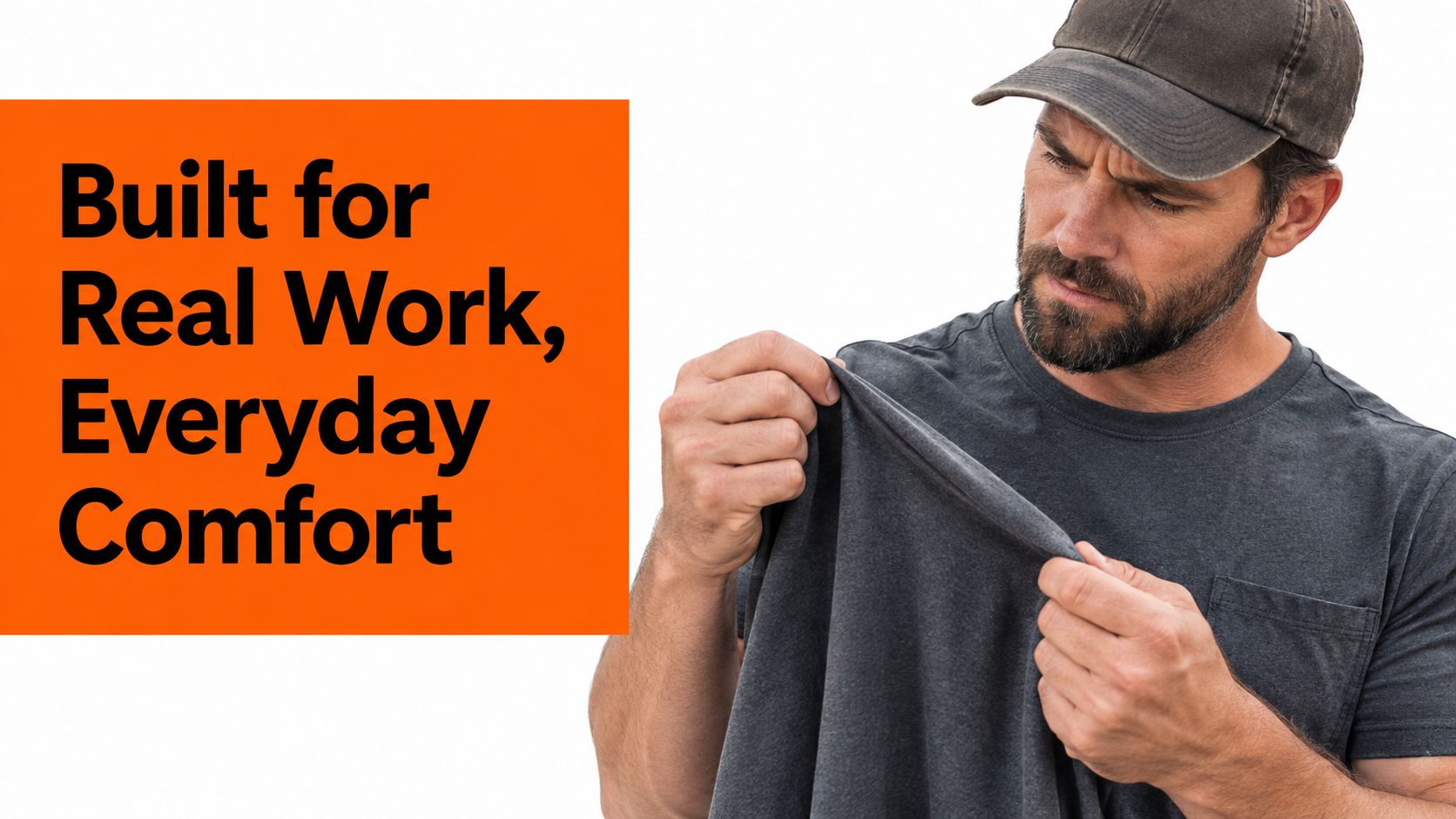
GSM is the number that gives fabric weight a measurable meaning. In plain terms, grams per square metre tells you how dense and substantial the cloth is, but it doesn't tell you everything about how the shirt will wear on site. Two tees can carry the same GSM and behave very differently once you start washing them, stretching them over a harness and putting them through a real roster.
What the spec sheet really tells you
Cotton type matters. Carded cotton still works well in heavy crew tees because it keeps the fabric practical and cost-effective while still delivering a sturdy feel. A heavyweight shirt built from carded cotton can suit crews who want structure without the higher cost or softer drape that often comes with more refined cotton processing. Construction details matter just as much as the weight number.
A tee that looks solid on paper can still fail early if the seams, hems and shoulder joins are weak.
Look for side seams, shoulder-to-shoulder taping and double-needle hems if the shirt is meant for repeated site use. Those features help a garment hold shape after laundering and reduce the chance that the neck, shoulders or hem distort under regular wear. Weight alone can't do that work.
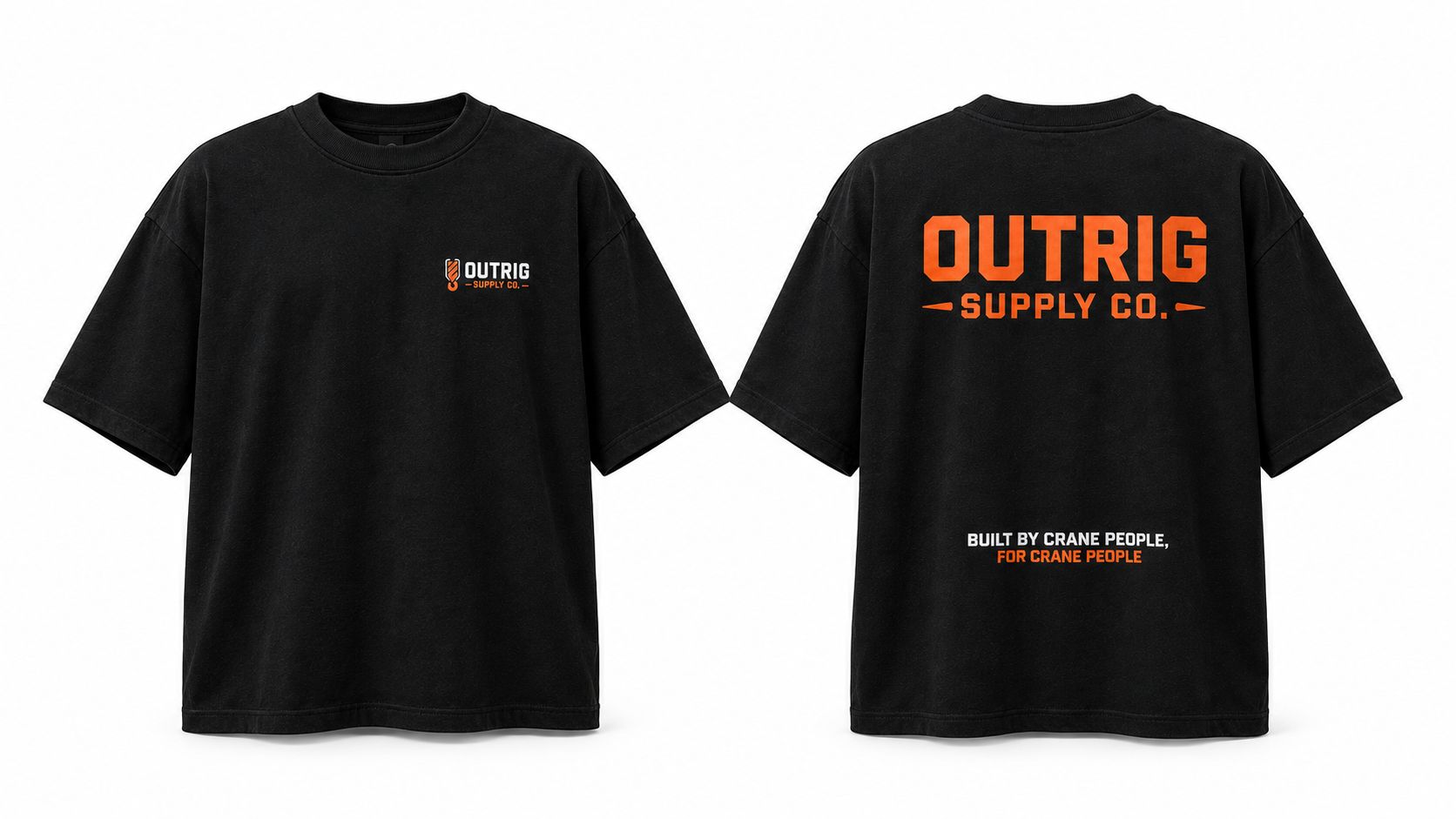
The Outrig Supply Co blog guide on heavyweight T-shirt fabric weight and fit is useful because it frames the shirt as a specification, not a fashion piece. The Outrig Supply Co Crew Heavy Tee is a relevant example of how a 280 GSM carded cotton tee can be built around a boxy oversized fit, dropped shoulders, wide neck ribbing, side seams, shoulder-to-shoulder tape and double-needle hems. That kind of build gives structure for print and a tougher feel, while still allowing normal movement when the cut is right.
Wash frequency, drying method and crew rotation often shape garment life more than a GSM number does. A well-made lighter tee that's rotated properly can outlast a heavier shirt that's abused, over-dried or forced into the wrong role every day.
Heat, Sun Protection and Real Shift Comfort
A shirt that feels durable in the hand still has to handle two separate Australian site realities, heat and UV. Weight alone does not solve either one. A dark, thick tee may look protective, but unless it has been tested, that is only an assumption, and assumptions do not belong in workwear procurement.
Heat management starts with airflow
Safe Work Australia advises loose-fitting, lightweight clothing that allows air movement and cooling, and notes that clothing can restrict sweat evaporation and increase heat-related illness risk (Safe Work Australia heat guide). That matters on outdoor worksites where the shirt sits under hi-vis, harnesses, or other PPE and the wearer is already generating body heat. A tee that holds moisture can make a shift feel longer before the job itself gets hard.
ARPANSA says outdoor workers should choose UPF 50 or higher under AS/NZS 4399:2020, and it makes clear that thickness or darkness alone does not prove UV performance (ARPANSA sun-protective clothing standard). That is the part many buying guides miss. A heavyweight tee may reduce some exposure, but it still leaves a lot of skin uncovered, and UV protection needs verified test data if that is part of the requirement.
PPE layers change the verdict
Once a shirt goes under a hi-vis layer, harness, or vest, fit matters as much as fabric. A tee that sits too close can bind when arms go up. A tee that hangs too loose can bunch under straps and create hot spots. For summer site wear, the better result usually comes from breathable fabric, a relaxed cut, and a clear sun-protection plan that includes sleeves, headwear, sunglasses, shade, and sunscreen.
Short sleeves are not a sun-protection system. They are one piece of it, and only when the fabric and the task support the choice.
For a practical comparison of sleeve length, see the Outrig Supply Co guide on long sleeve versus short sleeve crew tees. It treats sleeve length as part of a site system rather than a style preference, which is the right way to judge it in procurement.
How Women in Trades Should Evaluate Fit and Function
Women in trades often get handed a smaller version of a men's shirt and told that's enough. It usually isn't. The fit problem shows up in the details that matter on site, shoulder placement, sleeve line, neckline stability, body length and how the shirt behaves once a harness or hi-vis layer goes on.
Fit needs to support the job, not fight it
A standard unisex cut can pull across the chest, rise at the back when bending and sit awkwardly under shoulder straps. On crane, rigging and maintenance tasks, that creates chafe, bunching and distraction exactly where the shirt should be disappearing into the work. A women's tee should sit around actual body proportions, not just scale down the width and call it done.
Research on heat adaptation also found that clothing can become a barrier when social expectations require women to wear multiple layers in hot workplaces, which increases thermal burden. That lines up with the Australian heat guidance already mentioned, where clothing needs to allow movement and sweat evaporation rather than add unnecessary restriction (Griffith research on heat and clothing barriers). The point isn't softness for its own sake. It's functionality under load.
What to check before ordering
- Shoulder seam position: It should sit where the body moves, not creep into the upper arm and restrict overhead reach.
- Hem length: It needs enough length for bending and climbing without turning into a midriff issue.
- Sleeve proportion: Too long and it catches. Too short and it can ride up under layers.
- Neckline stability: It should stay put under a harness, not stretch open and sag through the shift.
- Fit balance: Relaxed enough for airflow, not so oversized that it tangles with equipment.
A fitted tee is not automatically better, and a loose tee is not automatically safer. The goal is controlled ease of movement, especially for mixed-gender crews where a uniform order needs to work across body types without creating new problems.
Choosing the Right T-Shirt by Task and Environment
The easiest way to stop overbuying the wrong tee is to sort the shirt by job, not by habit. A ground crew in full sun, a cab-based crane operator and a shutdown team wearing multiple layers don't need the same specification. One heavy shirt for everyone can seem tidy on paper and still create discomfort, heat stress or fit issues in the field.
Use the task to set the spec
| Task type | Fabric weight | Breathability | UV compatibility | PPE layering | Crew sizing need |
|---|---|---|---|---|---|
| Heavy-duty ground work | Heavier can make sense | Moderate | Require verified sun protection if exposed | Often under multiple layers | Broad sizing range |
| High-heat mobile work | Usually lighter or relaxed fit | High | Treat as part of full sun control | Must sit cleanly under hi-vis | Include women's fit options |
| Cab-based crane work | Moderate | Moderate | Important for time outside the cab | Less friction, but still layered | Consistent repeat sizing |
| Mixed-gender shutdown crews | Depends on task split | Task-specific | Verify, don't assume | Different layers across roles | Strong size and fit spread |
The biggest procurement mistake is issuing one heavyweight style all year round because it feels consistent. Australia's climate doesn't reward that approach. Summer shifts punish heavy fabric, while cooler conditions or lighter workloads may benefit from a shirt with more structure. The right answer is often two tee specifications, one tuned for hot weather and one for cooler or less exposed work.
A shirt also has to survive the life cycle of crew ordering. If you're replacing one garment at a time, the spec must match the original. If you're building a shutdown issue set, the cut, fabric weight and sizing spread need to work across the whole team. That's where repeat availability and clear measurements matter more than whatever looks toughest in a product photo.
Making Crew Orders That Perform on Site
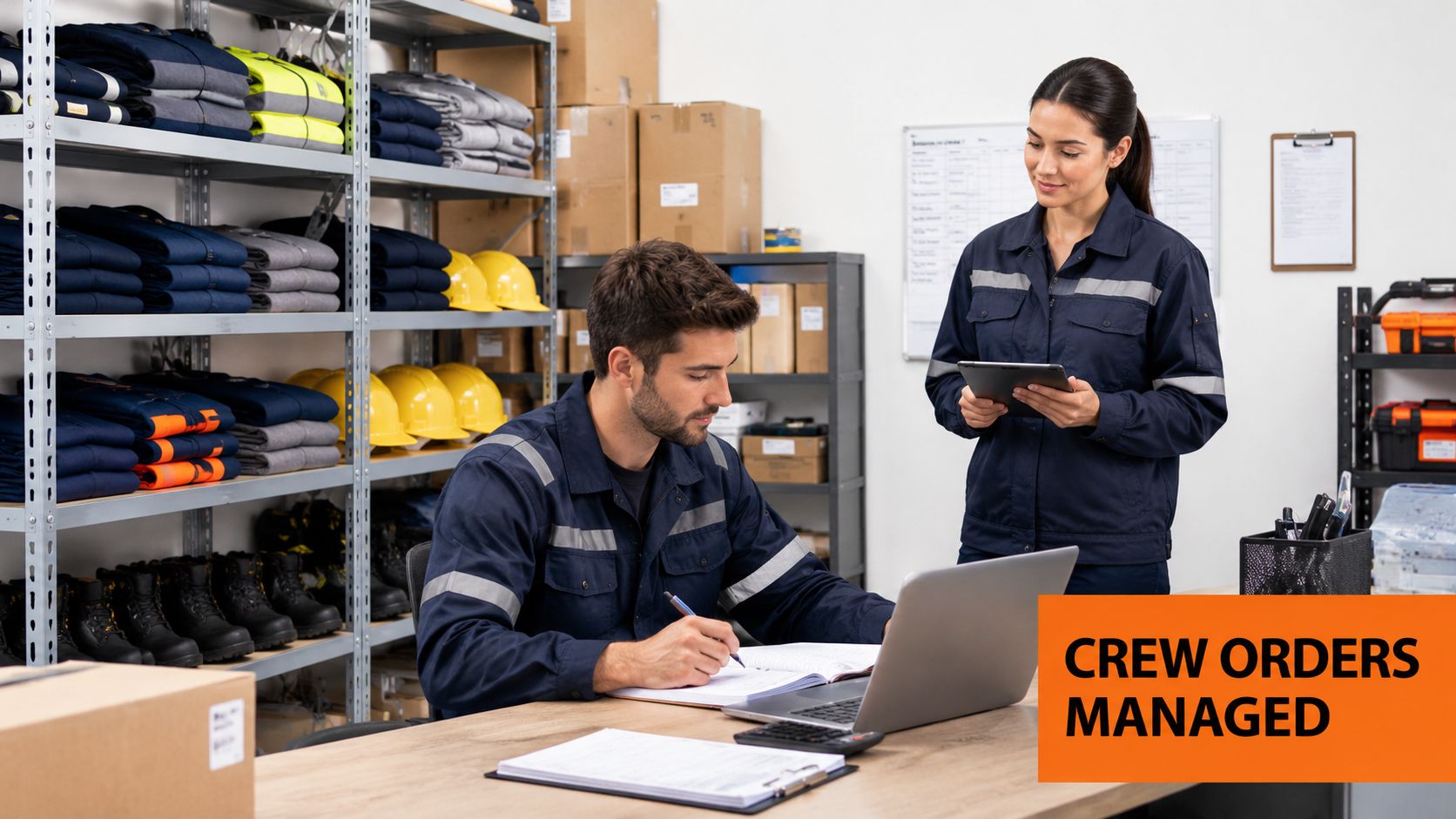
Crew purchasing gets messy when shirts are chosen for the logo wall instead of the roster. The cleanest orders are the ones that keep the supervisor from chasing sizes, the store person from re-ordering mismatched stock and the crew from complaining that half the shirts don't work in the heat. A brand built around crane and shutdown culture, such as Outrig Supply Co, fits that kind of use case when the order is about site identity, not generic streetwear.
Bulk orders work when sizing is predictable
Mixed-gender crews need more than a narrow size run. They need dependable fit options, enough consistency for repeat ordering and a shirt that doesn't force the same cut onto every body on site. The practical way to reduce returns and wrong issues is to measure people properly before ordering, especially when crew kit is being managed online (Outrig Supply Co measuring guide).
When a shirt program balances durability, thermal comfort, sun protection and inclusive sizing, it stops being a vanity purchase and starts doing work. That's the standard crews should hold to. Order by task, climate and PPE requirements, not by appearance alone.
If you need workwear T shirts that are built around real site conditions, Outrig Supply Co stocks crew-focused apparel for crane operators, riggers, FIFO workers and shutdown teams. Visit Outrig Supply Co to review the current range and choose shirts against fit, fabric weight and crew use, not just the way they look on a hanger.