

You're standing at pre-start with a coffee cooling in your hand, the cab hasn't warmed up, and the wind's found the gap above your collar. The jacket that felt fine walking out of the house suddenly feels ordinary. By the time you're handling gear, though, you might be wishing you'd worn something lighter.
That's the question behind buying a sherpa lining jacket for work: not whether it's warm, but whether you can manage that warmth across the shift. For Australian crews, a useful jacket needs to suit the waiting, moving, travelling and weather exposure that happen between clocking on and heading home.
Table of Contents
- Why Cold Starts on Australian Sites Demand Smarter Jackets
- How Sherpa Lining Actually Keeps You Warm
- Sherpa vs Fleece vs Quilted Linings at a Glance
- Getting the Fit Right for Real Work
- Matching Jacket Weight to Australian Roles and Regions
- Caring for a Sherpa Lining Jacket Across a Full Winter
- Putting It Together for Your Next Shift
Why Cold Starts on Australian Sites Demand Smarter Jackets
Consider a southern-site pre-start. You've come out of a heated vehicle, stood through the briefing, then waited beside the gear while someone sorts access. Nothing about the job has been physically demanding yet, but you're already cold.
Later, you're moving equipment and working up a sweat in the same jacket. Buying more insulation doesn't necessarily solve that problem. You need clothing you can adjust, plus somewhere suitable to get out of the weather.
Safe Work Australia's guidance on managing the work environment treats cold exposure as a combination of temperature, wind, rain, exertion, humidity, clothing and time exposed. It places warm clothing alongside controls such as shelter, heating, rest breaks and training, rather than treating a jacket as the entire answer.
Dress for the deployment, not the postcode at home
A Perth departure doesn't tell you what you'll need at your destination. Southern, high and exposed locations deserve a different packing decision from a warm inland assignment.
Australia has warmed by 1.51 ± 0.23 °C since national records began in 1910, according to the Bureau of Meteorology's State of the Climate summary. That national trend isn't a useful substitute for checking the conditions of your particular shift.
Before choosing a jacket, ask:
- Where will I be exposed? Think about the actual yard, cab, platform or access route, not just the nearest town.
- When will I be outside? A dawn arrival and an afternoon departure can require different clothing decisions.
- What will I be doing? Waiting for a lift and handling gear call for different amounts of insulation.
- What can I change? Identify where you can remove a layer, shelter or take a break.
Practical rule: Choose the jacket for the cold part of the job, then make sure you can adapt when the job changes.
The sensible starting point is a moisture-managing base, adjustable insulation and weather protection where needed. Sherpa can occupy the insulation role. It shouldn't have to do every job.
How Sherpa Lining Actually Keeps You Warm
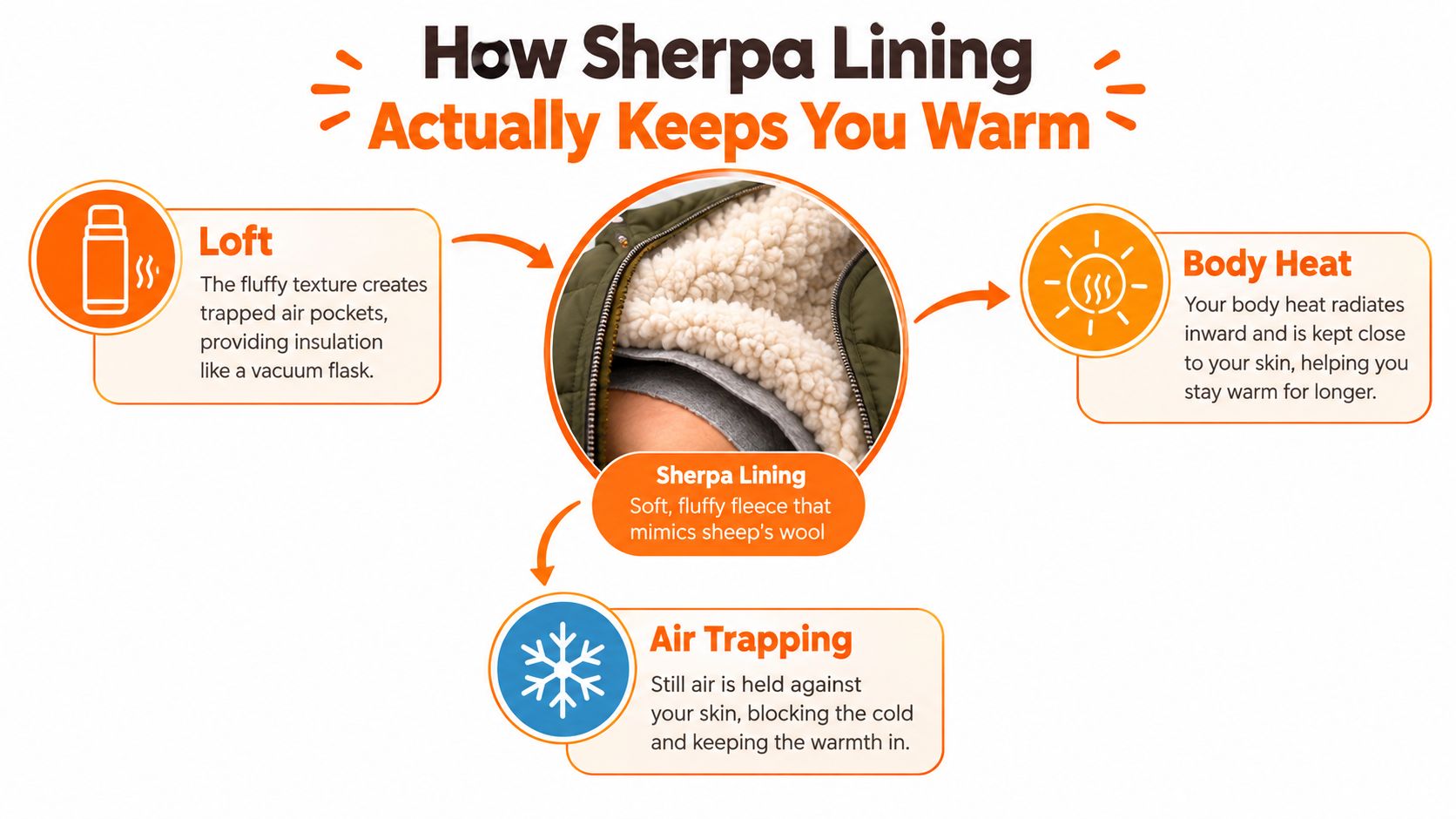
Sherpa lining is the fluffy, fleece-style inner that resembles sheep's wool. Its useful feature is its loft, the raised, open structure of the pile, rather than how soft it feels in your hand.
The lining holds pockets of air around your body. Think of a thermos as a reminder that insulation helps retain existing heat, although sherpa uses trapped air rather than a flask's vacuum. The jacket doesn't generate warmth itself.
This diagram shows the relationship between the pile, trapped air and body heat.
Give each layer a clear job
Start with a moisture-managing base layer suited to your employer's clothing requirements. Its purpose is different from the fluffy lining: you're managing moisture next to your skin, not just adding thickness.
Put the insulating garment over that. A sherpa-lined jacket might be your main warm layer in sheltered conditions, or sit beneath a suitable outer when the weather demands more protection.
The outer is closer to a tent fly in this analogy. Insulation and weather resistance are separate properties. A plush interior tells you nothing definite about whether the shell will resist wind or rain, so check those specifications independently.
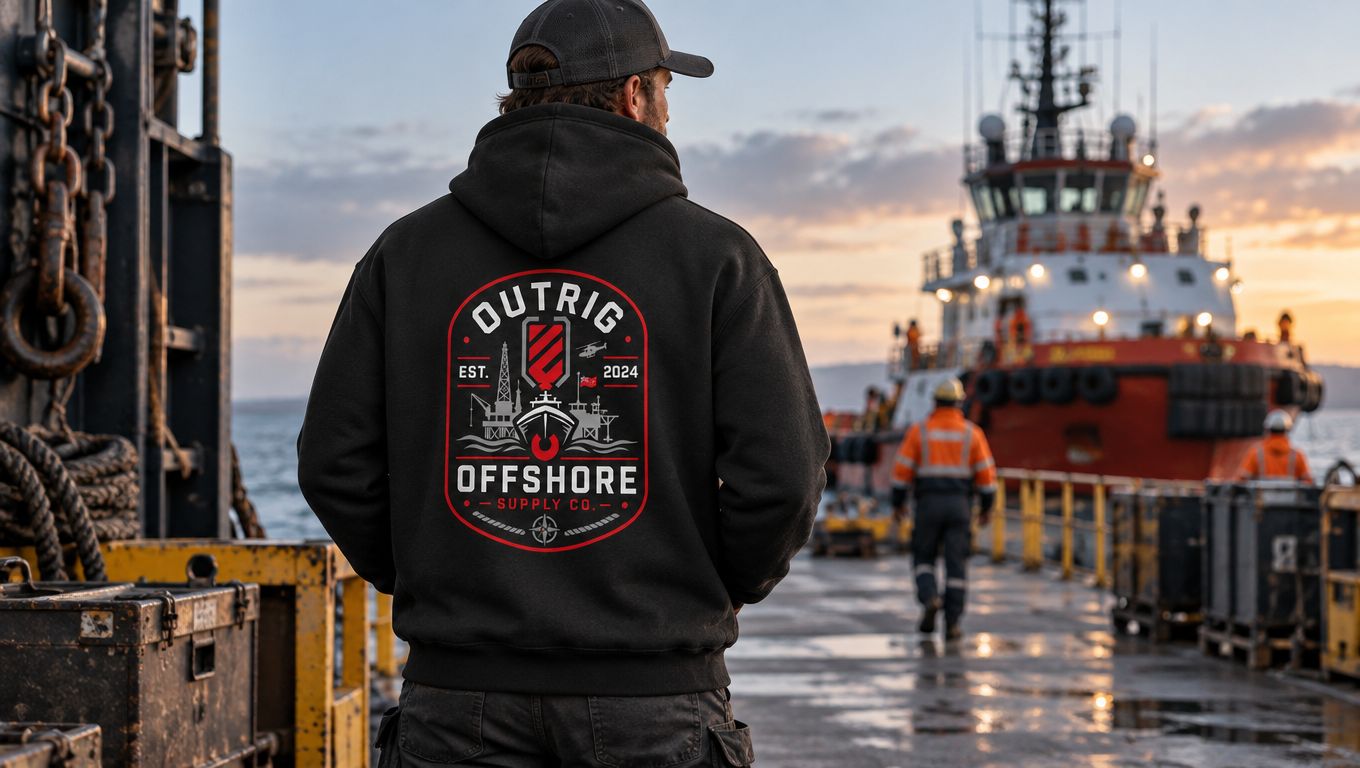
For comparison, the Outrig Offshore Crew Hoodie is a heavyweight anti-pill fleece garment with a relaxed unisex box-style fit, not a sherpa-lined jacket. It's an example of a different insulating option, and its product description identifies it as crew apparel rather than certified PPE.
- During a cold wait: Keeping the insulating layer on may make sense.
- Before demanding work: Consider whether you need to remove or open it before you become uncomfortable.
- When conditions change: Reassess the combination rather than assuming your pre-start clothing remains suitable.
The cold-risk guidance discussed earlier also recognises that clothing and PPE can impair sweat evaporation. That's why the answer to “Is sherpa warm enough?” needs a second question: warm enough for which part of your shift?
A comfortable waiting layer can be the wrong working layer once you're putting in.
Sherpa vs Fleece vs Quilted Linings at a Glance
Don't let the lining name make the decision for you. Sherpa, fleece and quilting aren't comparable performance ratings, and a product description alone may not establish which finished jacket is warmer, lighter or quicker to dry.
Quilting describes a construction approach, while a synthetic-insulated garment needs its actual insulation specification checked. A named synthetic fill isn't enough to rank it against every sherpa jacket.
Lining Type Comparison for Worksite Use
| Lining type | Warmth | Dries fastest | Movement friendliness | Typical cost |
|---|---|---|---|---|
| Sherpa | Consider for cold waiting periods; assess the whole jacket | No reliable ranking without garment information | Check pile and shell bulk during a fitting | Compare actual replacement prices |
| Standard fleece | Consider when adjustable insulation is the priority | Check fabric and care information | Trial it beneath required outerwear | Product-dependent |
| Quilted lining | Check the fill, coverage and shell | Construction alone doesn't establish drying speed | Test shoulder and elbow movement | Product-dependent |
| Specialist synthetic insulation | Look for documented garment performance | Seek product-specific evidence | Check the finished cut, not just the fill name | Product-dependent |
Compare garments, not marketing labels
There isn't enough product-specific information to declare a winner on warmth per gram, drying time or replacement cost. Anyone giving you a universal ranking without comparable specifications is skipping the details that matter.
Instead, compare the jackets you're considering. Ask whether the supplier identifies the shell fabric, lining coverage, care method and any documented weather protection.
For a working wardrobe that includes hoodies, this guide to work hoodies for men provides another garment category to consider alongside lined jackets. Don't assume you need both on your body at the same time.
My practical starting point would be sherpa for a shift with substantial cold waiting, provided the shell suits the exposure. For a physically demanding role, I'd first trial a less bulky fleece or lightly insulated alternative that's easier to adjust.
That's a selection approach, not a tested ranking. The fallback matters too: if rain is the issue, look for appropriate weather protection rather than just choosing a thicker lining.
Getting the Fit Right for Real Work
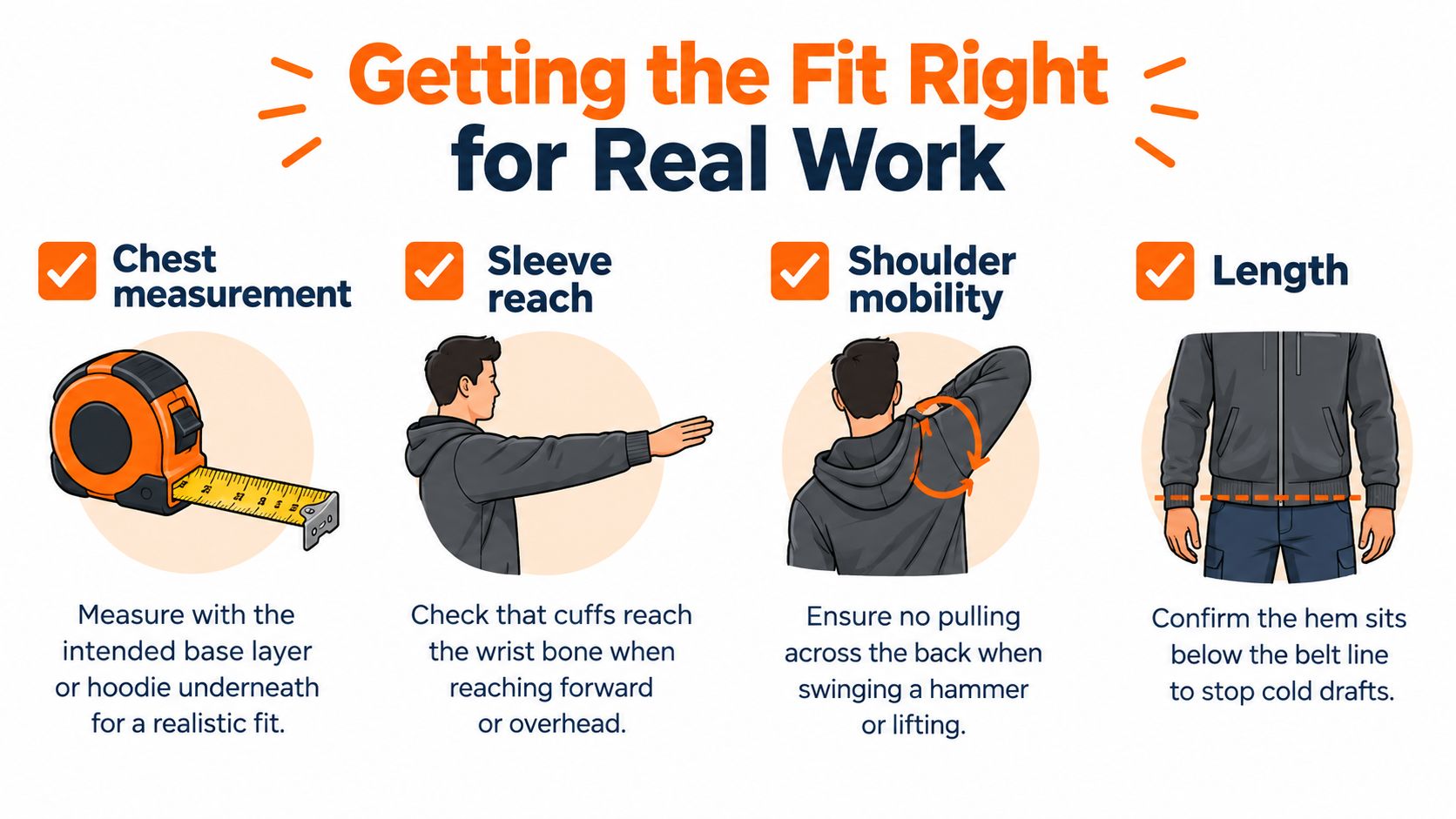
A jacket can feel comfortable standing in front of a mirror and still be awkward when you reach forward, sit in a cab or put on required equipment. Fit needs a movement check, not just a label check.
Use the illustrated checks as a starting point, then test the actual garment with the clothing you intend to wear beneath it.
Check reach, closure and clearance
Measure your actual chest as the supplier directs, then account for the intended base or mid-layer. Don't add an arbitrary amount and hope it works: garment measurements and body measurements aren't interchangeable.
- Chest and shoulders: Close the jacket over your intended layers, then reach forward. Check for pulling across the upper back.
- Sleeves and cuffs: Extend your arms and check wrist coverage, cuff security and compatibility with your gloves.
- Hem and seat: Sit as you would in the cab. Look for bunching, restricted movement or an exposed lower back.
- Equipment access: Check tool-belt access and any interaction with required equipment under your site's fitting procedures.
The Australian Capital Territory's extreme-temperature guidance recognises adding layers to manage cold and using appropriate warm, waterproof clothing where conditions demand it. A useful procurement implication is to check that workers can wear those layers comfortably.
For remote ordering, follow a consistent method using this guide to measuring yourself for workwear online.
Fit the wearer, not the crew average
Women in trades and mixed-size crews shouldn't have to accept poor reach or excess fabric because one nominally unisex style was easiest to order. Trial different cuts where available, and ask about size-range depth, garment measurements and exchanges before committing.
Use the video alongside your measurement checks, then confirm the fit against the supplier's own sizing instructions.
The warmest jacket on the rack isn't the right jacket if you can't move properly in it.
For a shutdown order, arrange sample fittings before ordering the crew's garments. Record each wearer's preferred size and cut rather than copying sizes from an unrelated brand.
Matching Jacket Weight to Australian Roles and Regions
Start with the part of the role that creates the clothing problem. A crane operator waiting in a cold cab has a different purchasing brief from a rigger moving continuously through an exposed yard, even when they're on the same site.
Choose weight by use, not by job title alone. The following are starting points for a fitting and site assessment, not temperature ratings or guarantees.
Match the garment to the task pattern
Crane operators with cold, low-movement periods can reasonably trial a more substantial sherpa-lined jacket. Check seated comfort and whether the garment remains manageable as the cab environment changes.
Riggers handling gear outdoors should pay particular attention to movement and shell suitability. Where the task is demanding, a lighter insulating option with separately selected weather protection may be a more adaptable starting point.
Shutdown crews moving between warm interiors and outdoor work need convenient adjustments. Before buying, consider where a removed jacket can be kept clean, dry and accessible without creating another worksite problem.
FIFO workers travelling to southern or raised sites should pack for the destination and expected shift exposure. The clothing that feels right leaving Perth may not be the clothing you want during an outdoor arrival or overnight assignment.
Crew fleece can form part of that broader wardrobe, but the pictured garment shouldn't be mistaken for a sherpa-lined or weatherproof jacket.
Build an option for the conditions that catch you out
A sensible buying brief might specify a warm garment for stationary periods and a lighter alternative for more active work. That's a recommendation to consider, not a claim that every crew needs the same wardrobe.
- Wind or rain exposure: Verify the shell's stated protection rather than judging by lining thickness.
- Changing work intensity: Prioritise easy adjustment and somewhere suitable to store removed clothing.
- Different body shapes: Assess outer-layer fit separately, including options discussed in this women's shell jacket guide.
A supervisor can make the discussion more useful by describing the exposure plainly: long waits outdoors, frequent indoor transitions or sustained gear handling. That gives the buyer something concrete to match, instead of a request for the heaviest jacket available.
Caring for a Sherpa Lining Jacket Across a Full Winter
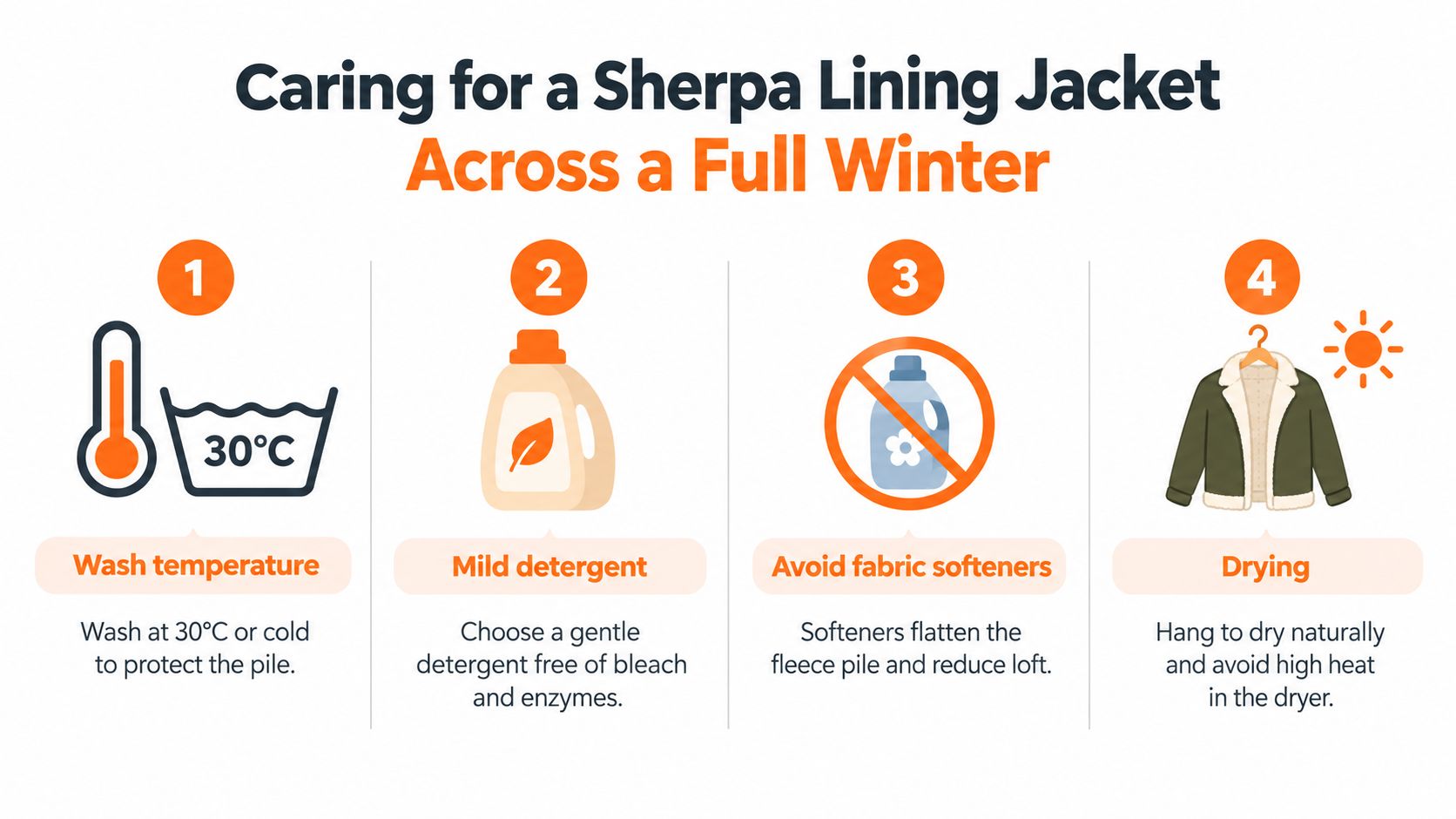
Start with the care label for your exact jacket. The shell, lining, trim and any applied finish may have different care requirements, so a general sherpa routine must never override the manufacturer's instructions.
This care graphic is a reminder of common considerations, not permission to use a wash setting that your garment label excludes.
Make washing a deliberate job
Before putting the jacket in the machine, empty the pockets and inspect the cuffs, hem and lining. Check for damage and contamination that needs a different response from ordinary laundry.
Use the label's wash temperature and cycle. If cold washing and a mild detergent are permitted, those are straightforward choices; don't assume a hotter wash is acceptable because the jacket looks rugged.
Avoid adding fabric softener unless the manufacturer specifically permits it. Likewise, check before using bleach, stain treatments or other laundry additives rather than applying the same routine you use for everything else.
For drying, follow the stated method and don't improvise with high heat to get the jacket ready before departure. Give yourself enough time to dry it fully before packing it away.
- Sweat and salt marks: Check the approved cleaning method before scrubbing or applying a strong treatment.
- Matted areas: Inspect pressure points beneath belts and around cuffs. Don't pull at the pile or attack it with a stiff brush without manufacturer guidance.
- Zips and closures: Remove loose debris gently and check operation. Don't force a snagged zip through the fabric.
Check condition between washes
A practical routine is to inspect the jacket when you empty your work bag. Look for persistent dampness, damaged seams, awkward closures and areas where the garment no longer feels comfortable.
Care priority: Don't trade the jacket's condition for the convenience of having it dry quickly.
There's no universal fortnightly washing schedule that suits every worker or garment. Clean it according to its condition, care instructions and site hygiene requirements, and follow site procedures if it has encountered hazardous contamination.
At the end of winter, clean and dry it as directed before storage. Choose somewhere clean and dry, avoid cramming it beneath heavy gear, and leave yourself a note about repairs or replacement needs before the next cold deployment.
Putting It Together for Your Next Shift
The useful purchase isn't necessarily the thickest sherpa lining jacket you can find. It's the garment that addresses your cold exposure without creating a movement, moisture or equipment problem somewhere else in the shift.
The cold-risk approach gives supervisors and buyers a better question than “Will everyone like this jacket?” Ask instead: “Where does this garment fit within the controls we already need?”
Turn the advice into a buying brief
Before ordering for yourself or a crew, write down the decisions that still need checking:
- Exposure: Identify the location, shift timing, weather and likely waiting periods.
- Layering: Decide which job the jacket will perform within the base, insulation and outer-layer arrangement.
- Adjustment: Confirm how workers will change clothing as tasks and conditions change.
- Fit: Arrange measurements and movement trials with the intended underlayers.
- Care: Check whether the cleaning and drying requirements are realistic between swings.
- Procurement: Confirm sizing, samples, exchanges and any production lead time before placing a bulk order.
For crane, rigging, FIFO and shutdown buyers, heavyweight hoodies and crew apparel are possible comfort-layer options alongside sherpa, fleece and insulated jackets. Compare them by the role they'll perform rather than treating the garment categories as interchangeable.
Keep the PPE boundary clear
A sherpa-lined jacket is not a substitute for mandated PPE. Warmth and comfort don't establish high-visibility compliance, flame resistance, chemical resistance or suitability for another task-specific hazard.
Check the exact garment against your employer's requirements before wearing it on site. A familiar workwear appearance, a bright colour or a substantial lining isn't enough to establish approval.
Shelter and break arrangements still matter, too. If the job leaves workers exposed without adequate protection, changing the jacket alone doesn't resolve the wider issue.
A useful crew briefing can stay plain: explain when the warm layer is intended to be worn, what conditions require different protection, where removed clothing belongs and who to speak to if the fit isn't right. That's a more practical outcome than handing everyone the same jacket and hoping it covers the shift.
Outrig Supply Co offers heavyweight hoodies, trade-representative crew apparel and bulk-order options for crane, rigging, FIFO and shutdown teams. Visit Outrig Supply Co to compare comfort-layer options, then check sizing and site clothing requirements before ordering for your next cold start.