

In Australia, hi vis tape is regulated retroreflective material used on high-visibility garments, and the finished garment has to meet AS/NZS 1906.4 and AS/NZS 4602.1 for night and day/night workwear compliance. It is not trim, it is part of the safety system.
A crew can look ready at smoko and still fail a site check by sundown if the tape is the wrong layout, the wrong class, or already worn down from washing. That's the core problem on Australian sites, the garment has to work in dust, rain, UV, and glare, not just on day one.
Table of Contents
- Why Hi Vis Tape Matters on Australian Sites
- Australian Standards and the Evidence Base
- Retroreflective Tape Technologies Compared
- Garment Classes and Required Tape Layouts
- Material Construction and Durability Expectations
- How to Inspect and Maintain Hi Vis Tape
- Applying Standards to Real Australian Workwear
- Common Mistakes That Undermine Visibility
- Quick-Reference Compliance Checklist
- Key Takeaways for Safer Crew Visibility
Why Hi Vis Tape Matters on Australian Sites
At 4 a.m. on a shutdown, the site is half-lit, the crane is moving, and a FIFO truck is edging backwards near a line of riggers. The operator is reading hand signals, the dogger is watching the load, and every reflective surface on the crew matters because a missed outline is the difference between a clean handover and a near miss.
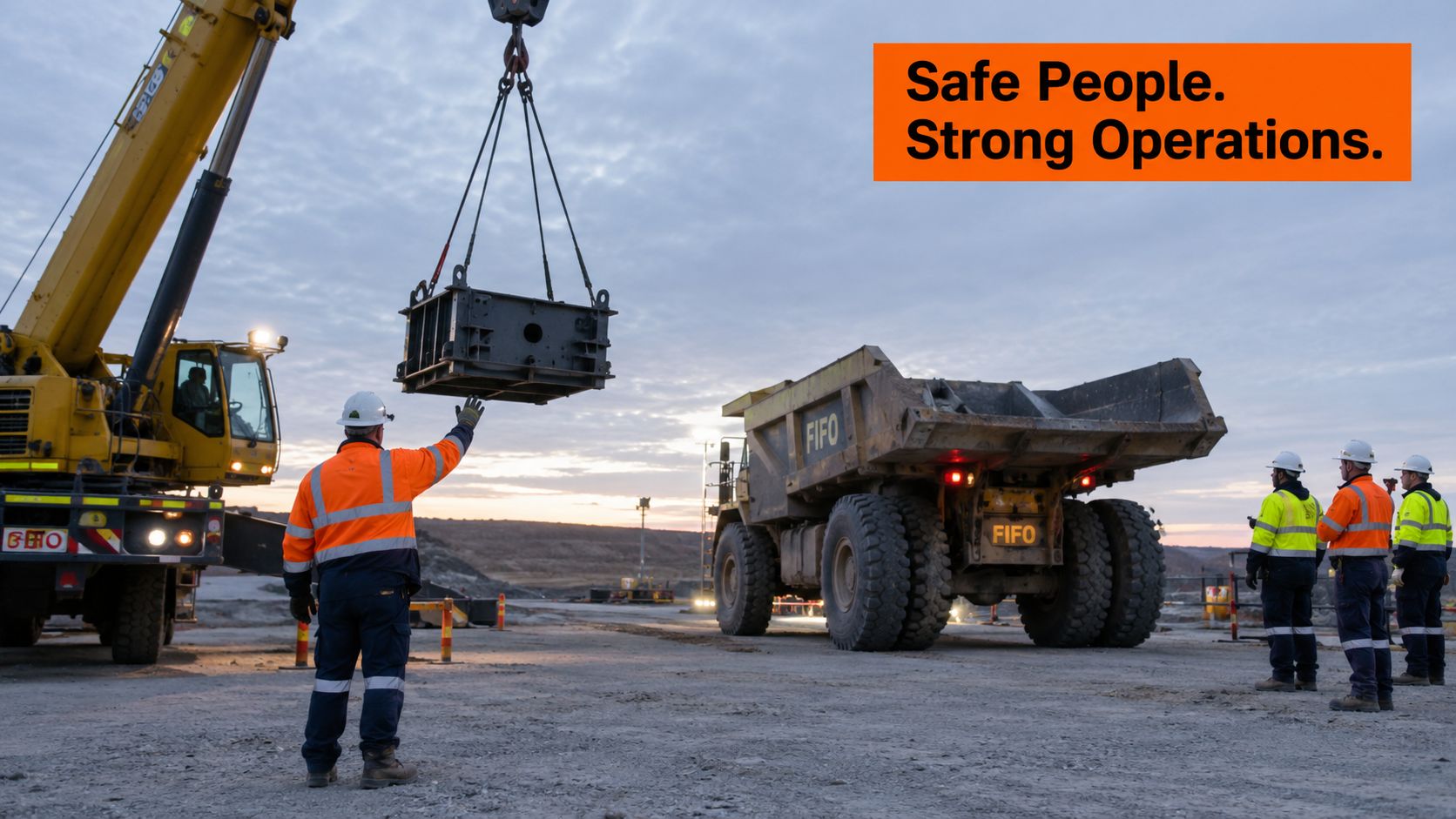
Hi vis tape earns its place because it gives a garment a visible return under headlights and low site lighting. The point isn't style, it's recognition at distance, from the angle a driver or operator sees.
On worksites that run through night shifts, transport movements, mining, and shutdowns, that visibility supports the crew's ability to stay separated from machines. The practical question is simple, whether the tape on the garment still performs after real use, not just when it comes out of the packet.
For supervisors and buyers, that means checking the garment as a safety item, not an accessory. The wrong layout, poor wash-life, or weak construction turns a compliant-looking uniform into dead weight.
Why Outrig Supply Co uses orange, black and white is a useful colour discussion for crew clothing, but colour alone never solves the tape problem.
Australian Standards and the Evidence Base
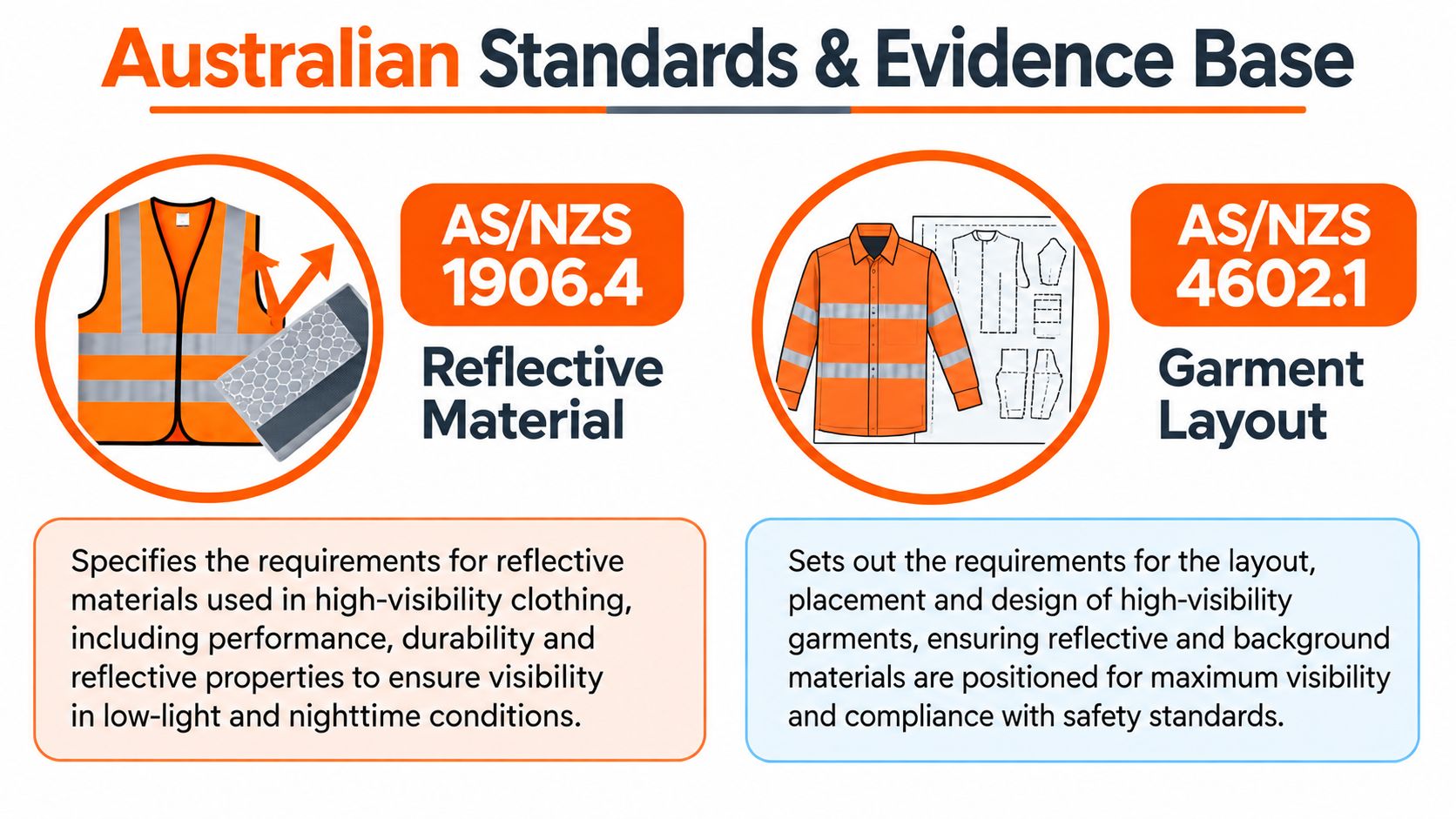
The two standards that matter
AS/NZS 1906.4 covers the performance requirements for the high-visibility material itself, while AS/NZS 4602.1 governs the finished garment design. In plain terms, one standard is about the tape, the other is about how the garment uses it.
Australian guidance commonly points to a 50 mm minimum tape width for compliant layouts, which is why narrow strips and decorative piping don't cut it for formal workwear checks. The tape also has to be durable enough to survive UV, abrasion, washing, and everyday wear.
That distinction matters because the tape is a regulated safety component, not an optional visual feature. If the reflective material doesn't perform, the garment may still look bright in daylight and fail exactly when the crew needs it most.
Why the standards exist
A major Australian review of conspicuity markings for heavy vehicles found that retroreflective tape reduced side and rear impacts into trailers by 29% in dark conditions, and by 41% in dark-not-lighted conditions, with a 44% reduction in side and rear impacts that resulted in fatalities or injuries in dark conditions. The same review noted Australia records about 240 fatal truck crashes annually on average over the previous decade, and about 31% of fatal heavy vehicle crashes happen at night. See the Australian review of conspicuity markings for heavy vehicles for those figures and findings.
That evidence is directly relevant to crane crews, riggers, and roadside shutdown teams because the hazard is the same, low-light movement around large plant and vehicles. Standards are the paperwork side of the issue, the crash-reduction evidence is the reason the paperwork exists.
Practical rule: if the tape layout or performance is questionable, treat it as a visibility failure, not a cosmetic issue.
Retroreflective Tape Technologies Compared
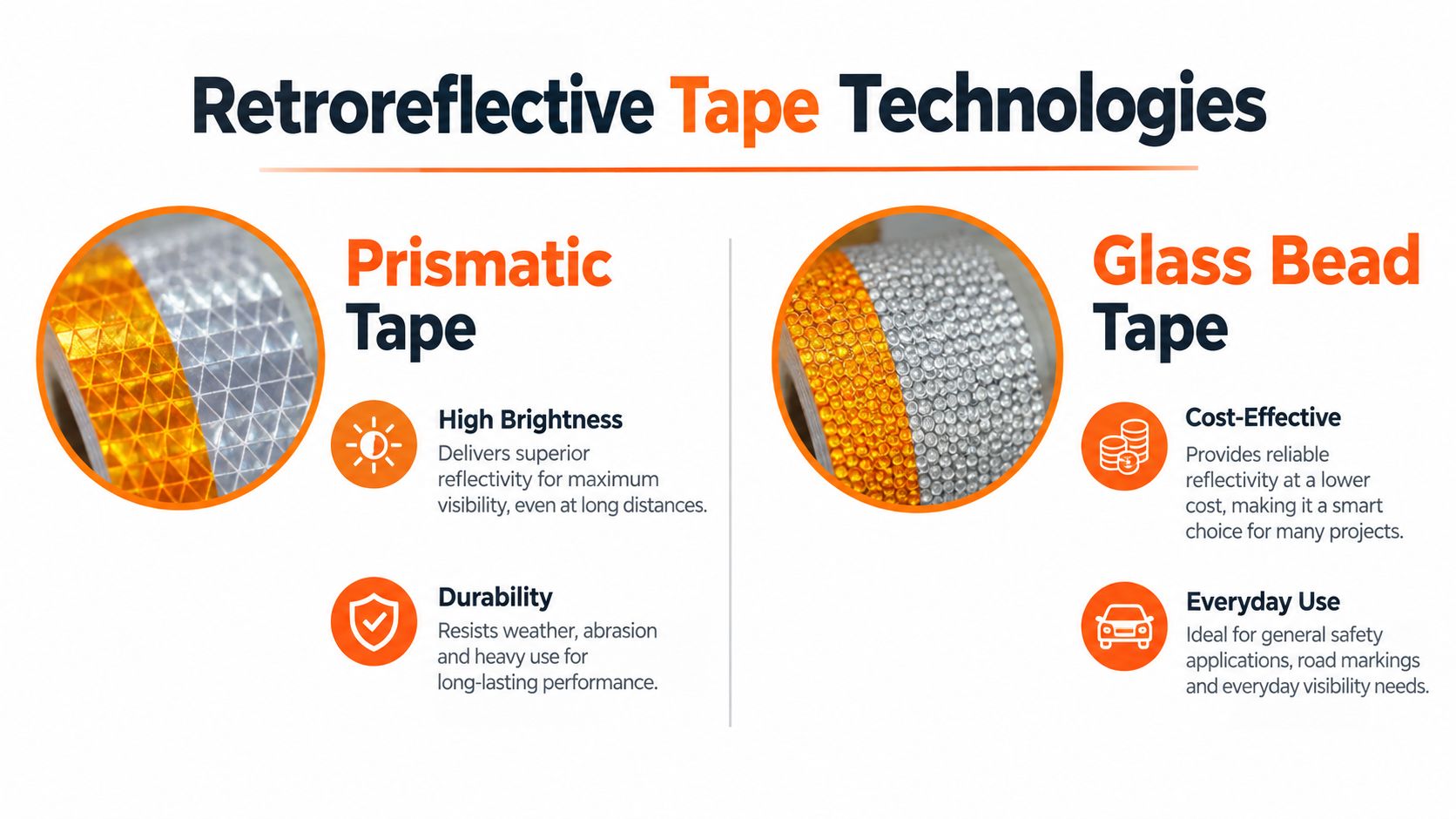
Prismatic tape
Prismatic tape uses engineered surfaces to send light back toward the source. On site, that usually means a sharper return when headlights or plant lights hit it at workable angles, which is why it's often selected for harsher low-light environments.
It tends to suit crews that spend long hours around moving vehicles, particularly where operators need to pick up the outline of a person fast. The trade-off is usually cost and specification discipline, because better performance only helps if the garment is cut and maintained correctly.
Glass bead tape
Glass bead tape uses microscopic beads to reflect light and is commonly chosen for everyday workwear use. It can be a practical option where the exposure is less severe and the garment still needs to meet the visibility requirement without overspending on a more specialised tape.
The limitation is angle performance and long-term durability, which is where cheap procurement can backfire. If the garment sees heavy washing, dust, and constant handling, a lower-cost tape may show wear far earlier than it should.
A crew hoodie such as the Outrig Supply Co Hi-Vis Hoodie, Orange/Black shows how reflective piping can be built into heavier workwear, but the same rule applies, inspect the tape performance and the garment class before anyone assumes it's site-ready.
On Australian sites, the best tape is the one that still reflects after the gear has been worn, washed, folded, and dragged through a normal shift.
Garment Classes and Required Tape Layouts
Match the class to the shift
Under AS/NZS 4602.1, garment class has to match intended use, so a day-only item is not the same thing as night-rated or day/night gear. That's where a lot of procurement mistakes start, because a bright top can still fail if its class doesn't match the work pattern.
The visible clue is the tape layout. For high-risk garments, the reflective tape has to form continuous torso hoops, and the layout needs to align with the class requirements, which is why broken side bands are a red flag in practical guidance.
What fails in the real world
A common mistake is buying garments that look “fully taped” from the front but break the reflective line at the sides or under the arms. That can undermine the required hoop continuity and create a non-compliance issue during a site check.
Another mistake is assuming sleeves or leg bands are optional because the front looks busy enough. If the intended use class calls for more coverage, missing banding isn't a minor detail, it's a layout failure.
Supervisor check: if you can trace the required reflective path with your eye and it stops, the garment deserves a second look before issue.
When procurement is ordering for crews, the question isn't just whether the tape meets the material standard. It's whether the finished garment class and layout suit the job the crew is doing.
Material Construction and Durability Expectations
What the tape is built from
Most hi vis tape is layered. There's a carrier, a retroreflective core that does the light-return work, and a protective face that helps the tape survive abrasion and cleaning. That layering matters because the material has to keep reflecting after repeated handling, not just pass a showroom check.
Australian-oriented guidance keeps returning to the same durability demands, UV exposure, abrasion, washing, and general wear. Those are the conditions that separate a garment that lasts on paper from one that holds up in the field.
Wash life is the hidden cost
A less-discussed issue is how quickly reflectivity can drop as laundering stacks up. Current Australian guidance notes that some tapes remain compliant for roughly 30 washes depending on the product, which is enough to create a real lifecycle decision for FIFO, shutdown, and rail or road crews.
That's the point most basic compliance articles skip. If gear is washed often in hot, dusty conditions, the cheapest tape can become the most expensive choice because it reaches replacement time sooner and creates more audit risk along the way.
The maintenance story matters just as much as the purchase decision. If a site is buying garments for repeated use, it should think in terms of service life, not unit price.
Outrig Supply Co's rugged gear collection is a practical place to compare worksite apparel and carry items designed for harder conditions, but the same durability logic applies across every supplier.
How to Inspect and Maintain Hi Vis Tape
Start before the shift
A proper inspection takes less than a minute if the crew knows what to look for. Check for cracking, peeling, frayed edges, faded reflectivity, and contamination from dust, oil, or grime that can dull the return.
If the garment has been folded into a locker, dragged across a ute tray, or left caked in site dust, don't assume the reflective surface is fine. The human eye often misses gradual failure until the tape is already past its useful life.
Keep the tape alive longer
Cleaning habits matter because poor laundry practice shortens the life of the garment. Wash it inside out, keep it with similar colours, and avoid direct ironing over the reflective area.
- Check the tape line: confirm the reflective bands are intact and continuous, not cracked or split.
- Feel the surface: rough, brittle, or lifting edges usually mean the coating is breaking down.
- Look after cleaning: if the shine looks uneven after a wash, mark the item for recheck before the next shift.
- Pull damaged gear: once reflectivity is clearly compromised, retire the garment instead of stretching it another week.
A clean-looking jacket can still be a poor visibility item if the reflective sections have been contaminated or worn flat. Maintenance is part of the safety control, not housekeeping.
Applying Standards to Real Australian Workwear
A finished garment has to solve the same problems the standards are trying to solve. That means visibility in low light, enough coverage to meet the class, and construction that survives routine wash cycles and rough handling on site.
The Outrig Supply Co Hi-Vis Hoodie, Yellow is a practical example of that thinking in apparel form, with high-visibility colour, reflective piping detail, and a workwear cut built on a SYZMIK ZT484 base. The useful part isn't the branding, it's the reminder that the garment has to combine warmth, visibility, and site-appropriate construction in one layer.
What to verify before issue
- Colour and class: confirm the garment matches the intended day, night, or day/night use.
- Tape layout: check that the reflective bands form the right continuous pattern.
- Wash expectations: ask how the garment should hold up under your crew's actual laundering cycle.
- Site rules: confirm PPE requirements before anyone wears it in the field.
That's where procurement gets practical. A good-looking garment can still miss the mark if it's the wrong class for the job or if the tape won't survive the site's wash routine.
Common Mistakes That Undermine Visibility
The biggest mistake is treating compliant-looking clothing as permanently compliant. A garment that passed at issue can fall short later if the tape has been crushed under harness straps, buried under grime, or weakened by repeated washing.
Another common problem is buying daytime gear for crews who work in night or day/night environments. The clothing may look bright in the depot, but it doesn't satisfy the use case once headlights and low-angle light become the test.
Cheap tape often creates the worst false economy. It may look fine out of the packet, then lose performance early enough that the replacement cycle wipes out any saving.
Crew habit matters: if the reflective bands are always covered by a vest, lanyard, or tool belt, the garment isn't doing the job it was designed to do.
Delaying replacement is the final failure. Once reflectivity is clearly compromised, the garment has crossed from wear item into risk item, and that's not a place to negotiate.
Quick-Reference Compliance Checklist
Before you issue or order a garment, check the following:
- Confirm the garment class: match it to the actual shift pattern, not the best-case one.
- Check tape continuity: look for uninterrupted reflective hoops where the design requires them.
- Verify width and layout: don't accept narrow decorative strips as compliant tape.
- Ask about wash life: if the supplier can't explain durability, treat that as a warning sign.
- Inspect after laundering: any cracking, peeling, or dulling means the item needs review.
- Replace on failure, not on convenience: if visibility is reduced, the garment is no longer doing its job.
A supervisor can use this list at stores, in the crib room, or during pre-start issue. The goal is simple, keep non-compliant gear off the crew before it becomes a site problem.
Key Takeaways for Safer Crew Visibility
Hi vis tape is regulated safety material, not decoration. It has to perform as retroreflective material, fit the garment class, and survive the conditions of the job.
Standards and layout work together. AS/NZS 1906.4 covers the material, AS/NZS 4602.1 covers the garment design, and both matter when crews work in low light.
Durability is part of compliance. UV, abrasion, washing, and wear all reduce visibility over time, so lifecycle management belongs in the safety plan.
Inspection beats assumption. If the tape is cracked, dull, peeling, or interrupted by poor design, it's time to pull the garment from service.
For crane operators, riggers, FIFO workers, and shutdown crews, the right call is the same every time. Choose garments that meet the class, hold up to washing, and keep the reflective path intact after real site use.
If you're ordering for a crew or replacing worn gear, Outrig Supply Co carries worksite apparel and crew-focused gear built around Australian trade conditions. Take a look at Outrig Supply Co if you want to compare hi-vis options, hoodie layers, and crew-ready gear with local fulfilment and practical site use in mind.